Chapter 105
First of all, thank you all for your support! You are all so adorable!!!
Actually, everyone can feel from the preface of "Jingzhou Chaos" that the difficulties and challenges Xiao Wang will face will be much greater than in the first volume.
I know some friends hope to see Xiao Wang immediately erase all his weaknesses, take off on the spot, reach the peak, press down and crush enemies with a wave of his hand, and grind villains into dust upon contact.
Writing it that way would be easy, but it wouldn't be very meaningful.
A nine-story terrace rises from a pile of earth; carving out a path amidst greater danger might have a unique flavor, don't you think?
Many times, the process is far more interesting than the result.
Xiao Wang is "living in the Southern Dynasties," and this word "living" is very important.
I want to use Xiao Wang's experiences to show you an immersive journey of transmigration—not rushing forward in a hurry, but genuinely experiencing every aspect of life in the Southern Dynasties, including the diet, literature, religion, politics, and customs of that era.
I try to ensure that even the smallest object has a source and every detail of a meal has a basis. I won't say I'm in the state of "searching everywhere" like writing a thesis, but I am definitely sitting upright, "searching through the sea of people behind closed doors," and there is no phenomenon of perfunctory writing.
In the process of writing, I am also clarifying some historical rumors circulating on the internet, but there are simply too many of these rumors. Firstly, I cannot clarify them all, and secondly, I don't know that much about these rumors myself.
I mentioned a method for identifying rumors last time. Let me mention another one this time.
If you encounter a statement that seems very suspicious, you can ask, "Where is the source?"
The so-called "speak only to the extent of the evidence you have." One part of evidence can only support one part of a statement; saying two parts is going too far. Without documentary support (including physical objects and texts), how can one talk about conclusions?
Historical rumors generally fall into four categories.
The first is that there is no documentary support at all; it is pure speculation.
The second is that the conclusion is expanded beyond the scope that the literature can support.
The third is that one can only have a superficial understanding of the documentary evidence, or one does not know about counter-evidence, or a single piece of evidence is not enough to establish a fact, or one does not connect the context, or one does not examine the historical background in which the evidence appeared.
The fourth is that the documentary evidence has not been subjected to philological examination.
The first three generally do not escape the words "taking it for granted."
Because these three words are the easiest to produce rumors, but as long as we think a few steps further, it is not easy to be confused by rumors.
For example, the assertion that "salt was a state monopoly during the Wei, Jin, Northern and Southern Dynasties."
Is that really the case? Was it a monopoly in the Wei Jin, or in the Northern and Southern Dynasties? Was it a monopoly in both the Southern and Northern Dynasties? Was it a monopoly in every dynasty of the Southern Song, Qi, Liang, and Chen? Was it a monopoly in every year of every dynasty?
What is meant by "monopoly"? Does it only count as direct state operation, or does it include official-merchant joint operation? Has the form of monopoly in the Northern and Southern Dynasties never changed? Is the word "monopoly" enough to encompass the salt policy over such a long period?
Take another example, the narrative of "cannibalism during the Wei, Jin, Northern and Southern Dynasties." Did cannibalism occur centrally during the Sixteen Kingdoms of the Five Barbarians, or did it occur centrally during the Northern and Southern Dynasties?
If it was concentrated in the Sixteen Kingdoms of the Five Barbarians, what was the degree of concentration? Was it like this in every one of the Sixteen Kingdoms? Was it a universal behavior or a special behavior? How long did this behavior last?
Compared with the Eastern Jin and the Southern Dynasties of Song, Qi, Liang, and Chen, was the frequency of cannibalism the same? Was it a specific case within a specific period, or were there many cases in a wide range?
Compared with dynasties like the Han, Tang, Song, Yuan, Ming, and Qing, was the number of cannibalism incidents in each Southern Dynasty higher or lower? Besides the total number, what was the frequency in an equal period of time compared to other dynasties?
What about the situation in the Northern Dynasties, from Northern Wei to Eastern and Western Wei, and then to Northern Qi and Northern Zhou?
You see, as long as you ask a few more questions, the allure of the rumor decreases significantly.
As for the fourth point, it is more complicated. Even evidence in ancient literature cannot be taken as absolute. For example, using Song Dynasty literature to prove the Tang Dynasty is not as good as using Tang Dynasty literature to prove the Tang Dynasty. And there are differences in the nature of Tang Dynasty literature itself; one must make a comprehensive judgment based on the proximity of the writing time, the difference in text genre, the creative tendency and purpose, and other factors.
Going a step further, sometimes official history may not be "truer" than fiction. Although the plot of a novel is fake, it can reflect a certain "authenticity"—for example, a popular emotion, a certain concept, or even a rumor, all reflect a certain "truth" of that time. Official history, on the other hand, often has embellished or evasive language, which requires "interaction" with "official history" using other documents to discover secrets from the "rhetoric" and "gaps" of the text. This topic would take a whole semester to discuss, so I won't go into it.
Finally, I will write about the origin of this book as the conclusion of this chapter's reflections, but please allow me to be lazy—this time I won't add annotations or change the words:
At the end of the Liu Song Dynasty, the Prince of Guiyang, Liu Xiufan, raised an army in Xunyang, wielding the thunderous power of the upper reaches, wishing to indulge his ambition of usurpation.
At that time, the capital was cold-hearted, and no one had a firm will. Rumors said the army was at Xinting, and thousands of scholars and commoners went to the camp to register their names.
Emperor Gao of Qi leaned against the city wall and comforted the crowd: "I am Xiao Pingnan; you gentlemen, look well."
The demeanor of that time still makes people yearn for it today.
Every time I read history to this satisfying point, sitting silently by the night window, the shadows of the past come to mind. Seeing the isolation of Qingzhi's army or the invasion of Hou Jing, I have never failed to clench my fists and sigh.
Alas, the past cannot be chased again.
Heroes are nowhere to be found, but the traces remain. Every time I read "Examination of Historical Tombs" written by Wang Zaijin, I admire it endlessly, and I have long had the ambition to seek the secluded in ancient capitals.
Later, I traveled to Danyang, viewed the stone carvings of the Six Dynasties, visited tiny paths among the grass and trees, and enjoyed the youth of wandering, which was quite full of the interest of being aloof and distant.
It is said that when Huan Wen visited the Gaoping Mausoleum, Jianwen looked at the spirit tablet, and Wen only said, "I dare not." After visiting the tombs of the Qi and Liang emperors, if I encounter this, I will surely copy it in the wind to satisfy my feelings.
However, the idle talk of water and sky has long fallen into the world; how can the old dreams of the capital be warmed again?
Although the Tianlu and Qilin are still there, the luxury of the Six Dynasties is no longer what it was in the past.
Unwarranted delusions, just like a lone swan reflecting its shadow, are self-pleasing in vain.
I like to read history about changes, such as factional infighting, the confrontation between North and South, the transition between different eras, and the transformation of the old and the new.
Because this is when personality is most visible. This is also what Chen Yinke called the distinction between "virtuous and unworthy, clumsy and clever" during times of chaos and change in his "Commentary on Yuan and Bai's Poetry."
In terms of modern academic standards, studying history should avoid sentimentality and likes and dislikes.
However, when reading history, these two taboos may be difficult to avoid due to private feelings.
Today, I was born in the era of the new century, but I still cannot be indifferent to things from a thousand years ago.
Such as the question of Emperor Wen of Han, "Why do the elders serve as officials?", or the tearful words of Uncle Zi climbing Mount Xian; or the usurpation of power by powerful ministers, the difficulty of completing the Northern Expedition, and the ambition to throw off one's sleeves to serve the king and sweep away the enemy.
Emperor Gao of Qi was indeed brave, but I especially dislike reading the part about the red horse entering the palace and the plotting under the locust tree.
Emperor Wu of Liang was a man of great talent, and the scholars of the Central Plains looked to him as the location of the legitimate rule. In his later years, he was muddled, though he did not lose his benevolence and righteousness. When Taicheng was besieged, the garrisons from all directions stood by and watched, leading to his humiliating death. Lingering on these old events, the regret is hard to suppress.
People often discuss the change in customs of the Wei Jin, thinking that the beauty of the scholar spirit of the Eastern Capital is no longer heard of in the Southern Dynasties.
However, after the Jin crossed the river, they still had a century of blessings; when Wang Dun invaded the palace, he dared not revolt.
Down to the Qi and Liang, the monarchs and ministers changed repeatedly. When Yan Jianyuan died for his integrity, Emperor Wu of Liang heard it and said: "I am following heaven and the people; what does it have to do with the scholars of the world?" With the Son of Heaven like this, one can imagine the human sentiment.
Historical events are complex, and even with the pen of a dream bird swallowing flowers, one cannot predict a single thing, let alone my clumsy knowledge and vulgar language. I did not expect to gain anything, but I wrote this novel to record the traces of my entertainment, which Westerners call "entertain an idea."
I hope you will join me in enjoying the fun of entertainment. See you in the next volume.
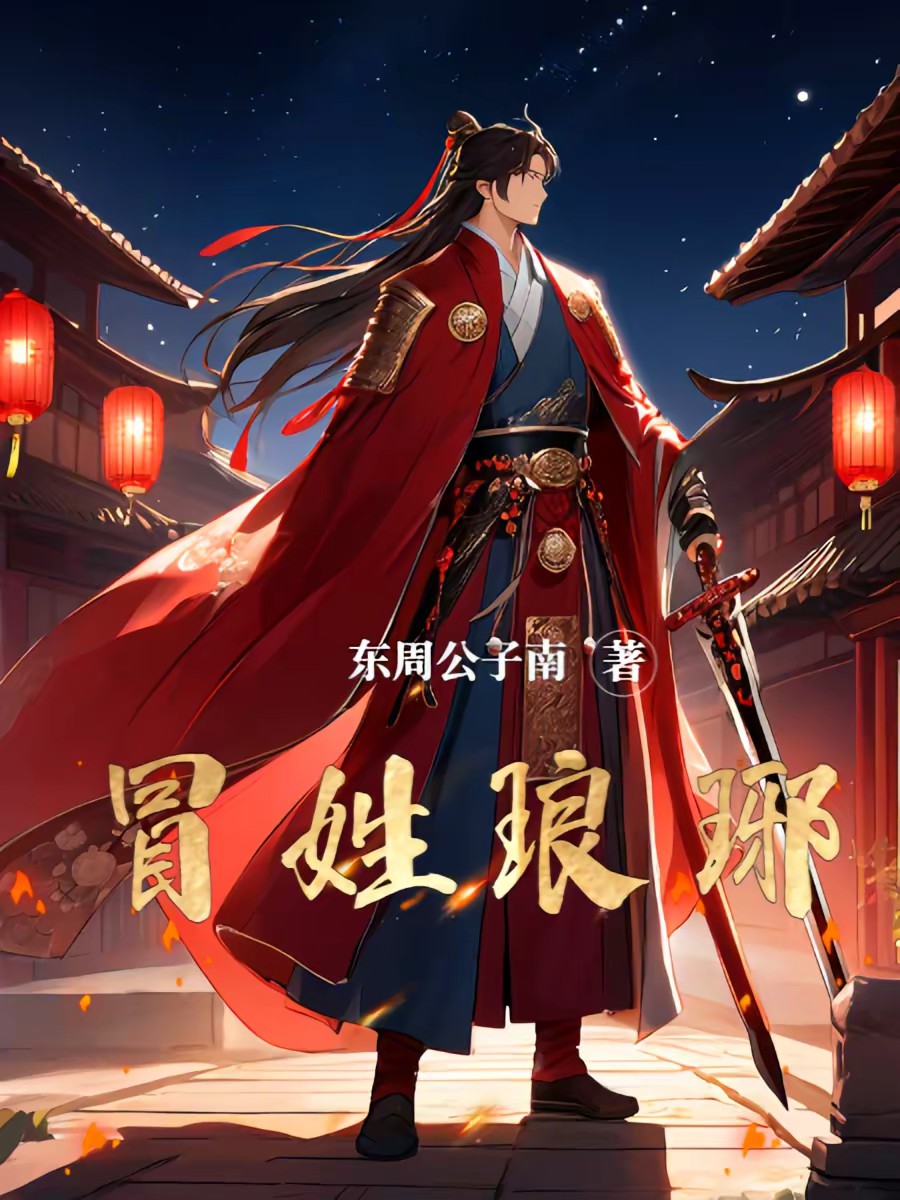
PS: The physical book of the first volume, "Chu Sky Afar," of this book, "Pretending to be from Langya" (alias "About the Fact That the Southern Dynasty Noble Son Is Me Pretending"), will be officially released at 19:00 on September 26, 2025. In addition to various platforms, Tomato should also have a direct link to the mall. The publisher is Hunan Literature and Art Publishing House. You can buy it at the flagship stores of Hunan Literature and Art on various platforms. Pirated merchants steal the pictures of genuine books, but the content is crudely made, so don't be deceived.
Books and gifts.
End of Chapter