Chapter 26: Kingdom in the Mountains
After a year of construction, Sakavi's wizard tower was finally completed. To prevent any short-sighted kin from raiding it halfway through, Sakavi made a special trip to the Black Forest to invite Redna over.
Redna declared that a friend's business was her own, immediately ordering the mobilization of one hundred wyverns to help Sakavi transport goods, and she personally stood guard. With the help of a demigod, no chromatic dragon dared to come and cause trouble along the way. However, shadows lingered nearby, never truly leaving until all the cargo had safely arrived home.
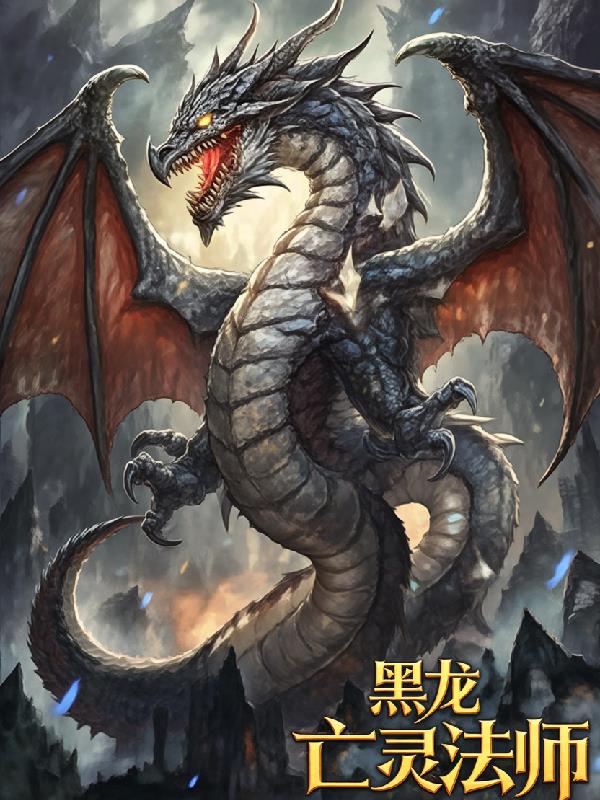
In normal times, Sakavi wouldn't have cared about one or two kin, as he was the only dragon here to have broken through to the Legendary Rank. Although dragons are innate magical creatures, they cannot simply break through to the Legendary Rank upon reaching adulthood; they must seek the opportunity themselves.
Currently, Sakavi had only broken through to the Legendary Rank in terms of his magical prowess; he remained at the Master Rank in his physical dragon form. Normally, only dragons reaching youth can attain the Master Rank level. However, Sakavi's journey had been fraught with hardships, and these disastrous experiences had stimulated his latent potential—or perhaps, his body was simply trying to save itself.
This kind of premature development severely impacts lifespan. By the time he reaches the old dragon stage—the 200–400 year age range—his body will age rapidly. Of course, if his body breaks through to the Legendary Rank later, that would be a different matter.
The lifespan of a normal dragon is only about 600 years, even if they live a full life. To extend it, one must break through to the Legendary Rank. A dragon at the Legendary Rank can extend its lifespan to about 1,500 years. At this age, one can outlive most enemies. If one wishes to go further, they must ascend to the Demigod Rank, which allows for a lifespan of up to 3,000 years.
Ignoring these unenterprising kin, Sakavi decided to properly plan his territory. First, he would notify all tribes to come and swear allegiance, sign vassal contracts, and delineate their respective territories.
"Everyone, you are very lucky to have met the powerful me. From now on, things here will only be done according to my rules. Submit to me; this is my grace toward you. Those who are sufficiently loyal and excellent will have the honor of becoming my... uh, this dwarf brother, we are holding a meeting. Why don't you discuss whatever business you have with my Grand Steward?"
"Grand Duke, I represent the Kingdom in the Mountains to attend your inauguration ceremony."
"Ahem, well... you are too polite. You stay here for now, and I will personally visit your King in Morida in a few days. Grapp, you go and entertain this dwarf envoy."
"Let us continue. Right now, you weaklings are not qualified to become my vassals, but that is not a problem, because I will give you the opportunity to pledge your loyalty to me."
"Those who grasp the opportunity will have all the wealth and power they desire, while those scoundrels who dare to resist the powerful Sakavi will suffer the most severe punishment. Alright, it is time for you to make your choice."
These demi-humans, who were at most at the Initial Rank, did not dare to jump out and cause trouble at this moment, and all expressed that they had no objections. Since there were no objections, it was time to do things according to the new rules.
From now on, all tribes with a population of over five hundred will be organized into towns, and those with a population of over one thousand will be organized into cities, which must be guarded by Drow Elves. Any settlement with more than two people will be a village.
All adult males of every tribe must go to the Bohe Plain to participate in the construction of the new city, Agrik. This name comes from the Dragon Tongue and means "The Gathering Place of Dragons." Sakavi hopes that this name will attract those juvenile dragons who, like his former self, were forced to leave home. Of course, if adult dragons come to seek refuge, they are also very welcome.
This name did not attract any dragons, but it did attract Klaussuna. Hearing that Sakavi had built a new city here, she rushed over to join him. Sakavi, who was severely lacking in manpower, had no room to be picky and directly gave her the position of Red-Robed Patriarch of the War God Society.
Normally, such a religious position can only be appointed by the church, but Sakavi did not intend to reason with the War God Society. Regarding the church's repeated demands for the corpse of the devil Dius, Sakavi remained stubborn, claiming he knew nothing. The Bator Underworld was pressing hard.
A devil who had come to conduct business had disappeared without any warning, which greatly troubled the War God Society. Without confirming his collusion with demons, they could not simply kill him. He had just died like that, without even a corpse, leaving them unable to answer to the Bator Underworld.
Originally, the church intended to catch him in the act or have Sakavi do it, so they could shift the responsibility onto him. This would teach the Bator Underworld a lesson without making the relationship too ugly. Sakavi indicated that he could take the blame, but the benefits had to be in place.
Just like that, Klaussuna, who didn't even know the doctrine, became the Cardinal for the entire Western Continent. Whether she could understand the doctrine was none of Sakavi's business; it was enough for the stubborn people in his territory to know what the War God Society was.
After handling matters here, he left Grapp in charge of dealing with various disputes in the territory and Vilna in charge of building Agrik, while Sakavi went to the dwarf nation of Morida.
Sakavi was very satisfied with Vilna's aesthetic sense; after all, she was a proper noble, the kind with thousands of years of heritage, and letting her be responsible for building this city was very reassuring.
As for the original station of the Warcry Tribe, Giant Tooth Fortress, Sakavi waved his hand and gave it to the Gray Dwarves. As a leader close to the people, how could he live in such a dangerous place? Besides, no ordinary person dared to provoke him, and those who did wouldn't be stopped by the terrain anyway.
After the last meeting, he called the envoy from Morida over and asked in detail, receiving a very speechless piece of news.
It turned out that because the Morida Kingdom could not get along with the orcs at all, the relationship between the two sides had become very rigid. The people of the Warcry Tribe were drooling over the iron mines in the Antradus Mountains and had actually demanded to extend their territory to the coastline of the Endless Sea.
Naturally, the Rosen Royal Court was very happy to do something that would annoy the dwarves. Just like that, the Warcry Tribe, holding their new map, started a three-hundred-year war with Morida.
The dwarf kingdom, whose population had withered due to the war, was unwilling to start another conflict when facing the newly arrived Black Dragon and could only admit that they were part of the Grand Duke's territory.
Flying above the entrance to Morida, the first thing that caught his eye were two giant stone gates, tens of meters high, forged from solid obsidian inlaid with refined steel, with the ancestors of the dwarves and clan totems carved onto them.
Standing next to the gates were two dwarf warrior statues taller than the city gates. They held battle axes and giant hammers, their stone gazes eternally staring into the distance, guarding the kingdom behind them.
Soon, the mountain-like giant obsidian gates slowly opened a gap amidst the low roar of countless gears and chains. The first thing to pour out was the warm, dry air from inside the gate, mixed with the scent of furnace smoke, aged ale, and bedrock.
A dwarf stepped out from the shadows of that gap, all alone. He wore a deep purple velvet robe, covered by a formal dress embroidered with mountain and anvil patterns in refined gold thread. His pace was not fast, and every step carried the heavy and steady feeling peculiar to dwarves, as if connected to the earth.
He lifted his stern-lined face, and those gray eyes, like steel tempered a thousand times, looked precisely at the shadow approaching in the sky ahead. The wind became rapid, carrying the stench of sulfur and swamp, blowing the hem of his robe, but he remained motionless, without the slightest fear or flattery in his eyes.
"Lord of Agrik, the gates of Morida are always open to you. Mo Ge Ironshield pays his respects to you!"
"King Mo Ge, don't be polite. I did not bring a declaration of war here. I want to know Morida's attitude toward me: submission or resistance to the end."
"We are willing to become your loyal allies, your strongest backing. We do not want to start a war, nor do we want to become anyone's slave or lackey."
"State your price, dwarf."
"You misunderstand, Lord. We have already made it very clear: we do not want to become anyone's servant. We only fight for ourselves and our allies."
"So that is a choice for war?"
"If a choice must be made, yes."
As a race famous for their stubbornness, dwarves almost never change any decision they have made; they are the most loyal allies. But do not think they will not lie; in fact, they are very good at using existing conditions to mislead those who come to negotiate.
"Then, do you think you can win this war?"
"No. We know your strength, but we do not intend to submit to anyone."
"Oh? Your stubbornness will not make me make any concessions. You understand what I mean!"
"Legendary warrior Mo Ge Ironshield and five Master Rank warriors, twenty High-Level warriors, are willing to serve you!"
"Not enough, Mo Ge. You must know that the price for combat power that is unwilling to leave its territory must be halved."
"We can provide you with ten thousand sets of orc standard equipment every year, plus one thousand crossbows and one hundred thousand crossbow bolts."
"Must add twenty inscribed weapons."
"We agree, Dragon. Morida welcomes your arrival."
"Please call me Sakavi, my ally. I hope you can send people to participate in the construction of Agrik. You know, I am very short of manpower, especially craftsmen. I will pay you enough."
"No, no, no. Morida cannot accept money from allies. Helping allies is our duty. We will send fifty blacksmiths and three hundred stonemasons."
"How many adult dwarves are left in Morida?"
"One hundred and fifty males, three hundred females. Sakavi, you must know that the dwarf birth rate is not high, and we have been fighting for years, and the economic environment is very bad. In such a harsh environment, our female dwarves are very difficult to conceive, and male dwarves are constantly dying in battle."
"The days of suffering are over, my friend. I am working hard to establish order in this land."
"Various evil creatures hiding in dark corners are starting to stir. You should take precautions early, my friend. I look forward to the new order you are building."
"Relax, they are just some small troubles. I will solve them."
After finishing the business, Mo Ge invited Sakavi to visit the Furnace Heart Hall to show the strength of the dwarves as allies. This is the core of the kingdom, a huge, naturally formed domed cavern.
It is so high that the top is shrouded in shadow. In the center of the cavern is a giant furnace known as the "Eternal Furnace," which burns day and night, illuminating the entire hall in a pulsing orange-red light.
The light of the furnace shines on the countless layers of stairs, corridors, and buildings carved into the four walls, as if ten thousand lights had been lit inside a hollowed-out mountain.
Next is the Gold and Stone Hall: the King's throne room. The throne is carved from a single piece of primitive mountain stone, with a waterfall of molten gold that pours down and freezes in an instant behind it.
The pillars of the hall are themselves giant crystal clusters or gold veins, shimmering with breathtaking light under the firelight. This is not only the center of power but also the ultimate display of dwarf wealth and craftsmanship.
Looking at this dwarf city-state that has continued for ten thousand years, Sakavi is full of awe for this race with a heavy history. The wheels of history ruthlessly crush one civilization after another. In today's world, the living space of the dwarves is becoming smaller and smaller.
Perhaps these descendants of Moradin will one day eventually perish, and the world will only be able to find the glorious years of the dwarves from the songs of bards or the fragments of some dusty history book. ===== CHAPTER 27 =====
End of Chapter