Chapter 5: Heading to the Great Swamp
Life at Velanse's home was incomparably comfortable. The fruits here contained rich magic power. In one year, Sakavi not only successfully got through the Juvenile Dragon Stage, but his body length also grew to three meters. If he were in the wild, he could only grow to about 2.4 meters at this stage.
During this period, Velanse's home was made into a mess, with a faint fishy stench everywhere. Although Velanse didn't say anything, Sakavi was already too embarrassed to stay any longer.
In the more than a year here, it could be said that he had gained a lot. The elven race's attainment in magic had reached the pinnacle, and the kind of shoddy magic in Sakavi's Dragon Scripture was simply unwatchable.
Velanse taught him everything about various magic without reservation. Even when Sakavi was about to leave, she stuffed him with several magic books, as well as seeds of various fruit trees and herbs, saying that if Sakavi couldn't make a living one day, he could still maintain his income by selling potions.
Finally, under Velanse's insistence, Sakavi could only agree to go to the Great Swamp at the edge of the western forest together.
With a Master Rank druid accompanying him, he didn't encounter any blind magical beasts on the road. When they reached the edge of the swamp, Sakavi requested to deal with the swamp monster entrenched in this great swamp by himself.
For himself in the adolescent stage, every battle with a magical beast was indispensable experience. Velanse did not express opposition to this. However, dealing with a swamp monster with the strength of an adolescent dragon was not easy, and Sakavi didn't intend to be headstrong and go one-on-one.
According to the information brought back by the birds, there was a lizardman tribe at the edge of the swamp, which was most suitable as a vassal in the future. Lizardmen do not belong to dragon-kin, and their obedience to dragons is not as good as kobolds, so they must be deterred by powerful force.
Therefore, it was very necessary to let them observe on the spot how their master defeated the swamp monster. As for the tickets for watching, they were naturally brought by the losses they suffered in the vanguard.
The sky above the swamp was shrouded in thick fog. The lizardman tribe's village was located on a mud island in the distance, and the air above was filled with the smell of fish, fireworks, and swamp rot. Suddenly, all sounds—frog croaks, insect chirps, lizardman hisses—disappeared.
After dozens of breaths, a deeper pressure from a predator shrouded the place, accompanied by a thunderous roar, and the Dragon Might spread out like a tangible shockwave. Most of the weak lizardmen fainted on the spot, and the strong lizardman warriors also instantly dropped the bone spears and shields in their hands, let out terrified hisses, and curled up on the ground.
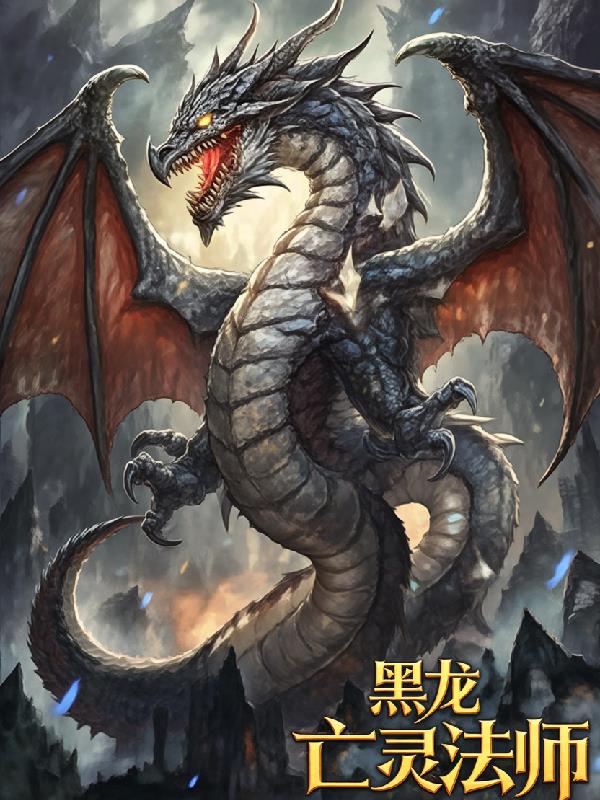
"Kneel, bugs!" The black dragon's voice was like two millstones rubbing against each other, accompanied by the hissing sound of sulfur and acid. "This swamp, from now on, belongs to me!"
Responding to the black dragon was a suffocating silence. He originally thought it would end like this, however, danger always hides in the shadows. From a mud pool completely covered by rotten reeds, a highly compressed water arrow shot out like a poisonous snake!
It tore through the air, making a sharp hiss, aiming directly at the black dragon's relatively fragile eyelids—this was undoubtedly a fatal blow carefully chosen, containing all the caster's anger and determination.
The one who made the move was a lizardman warlock who had been ignored all along. Its ancient bone ornaments flashed with a faint light in the turbid air, and its scales opened slightly due to the full-force spellcasting.
But for a dragon, especially a black dragon known for being cunning, "end" was always a state that needed to be repeatedly confirmed. This lizardman warlock had been noticed by Sakavi since the beginning of spellcasting. How could a chromatic dragon become an existence that everyone shouts to beat without being famous?
Sakavi didn't choose to dodge. His huge head tilted violently, and the water arrow whistled past the scales on the edge of his eye socket. The scale that was grazed instantly condensed a layer of cold white frost, making a faint "click" sound, proving the magic power and cold contained in this blow.
"Interesting, since you like to resist so much, then this slave contract will start with you!"
After saying that, Sakavi took out a contract written on grass paper. This kind of contract is one of the common methods used by chromatic dragons to gather vassals.
Because chromatic dragons will not have trust in any vassals, facts have proven that they are indeed untrustworthy, and the contract can only restrain them from betraying. As for combat power, he never dared to compliment it.
Under the dragon's gaze, the lizardman warlock had long been paralyzed with fear, letting Sakavi press his hand on the contract to make a handprint. Subsequently, the contract burned without fire.
"Where is the chieftain? Get out here!"
An old lizardman shaman-like figure crawled up from the ground and said: "Luen River-Swamp is at your service, great master."
His head was thinner and more angular than an ordinary lizardman, more like an old dragon or crocodile. The dark green scales had become dim due to the years, with gray-white edges, like a rock covered with moss. His face and the top of his head were covered with crisscrossing scars, and he didn't look like an easy person to deal with.
His eyes were turbid amber, and his pupils were like a vertical black line. His hunched back didn't seem to be weak, but rather the heavy pressure of carrying the tribe's burden and communicating with the spirit world for many years.
He wore a thick ritual robe made of dark moss, stitched giant lizard skin, and woven reeds. The robe was covered with various "spiritual objects," dried poisonous snakes, owl feathers, strung-together water monster teeth, and small leather bags filled with mysterious powder.
He held an ancient staff tightly in his hand. The staff body was a whole giant, already fossilized snake bone or the spine of some monster, and the top was embedded with a skull wrapped in runes that emitted an ominous green light.
This was not only his scepter but also his medium for guiding the power of nature and the wrath of the ancestors. His whole body emitted a complex scent mixed with herbs, aged mud, incense, and a trace of blood.
Being able to settle down near the swamp monster, this old shaman was destined not to be an ordinary person. His attainment in magic might even be above his own, and he would play a very big role in the construction of the territory in the future. However, despite this, Sakavi still didn't intend to let this old shaman go.
When the strength is not strong enough to completely ignore the existence of vassals, the art of management becomes particularly important.
Sakavi couldn't sign a slave contract for every lizardman. If a newly promoted lizardman warlock appeared while he was sleeping, then it was very likely that he would be plotted against. Therefore, Sakavi planned to divide and disintegrate them, letting them supervise each other internally.
"Very good, you look very excellent, but this is not enough to let you survive. That warlock who attacked me is your student, right! I don't mind who resisted me, because that is destined to be futile, but an incompetent subordinate does not deserve to appear in front of me."
After saying that, Sakavi cast a Fireball Spell, letting this old shaman be burned to ashes in painful wailing. Looking at the fate of their previous chieftain, no matter who took over as chieftain in the future, they would try their best to avoid following in his footsteps.
In this way, the object of the lizardmen's resistance changed from Sakavi to the minions working for Sakavi. The one who successfully resisted would be the next minion.
"Who among you is the strongest warrior?"
After saying that, he saw a burly lizardman stand up and say: "Lorn Blood-Spear is at your service, great master."
"Sign this contract, and you will be the next chieftain."
In Sakavi's plan, the priest should be a pure spiritual leader, just jumping around and doing gods' work when there is nothing to do. Power breeds ambition. As a chromatic dragon, one should not trust anyone, so naturally, it is impossible to give any vassal too much power.
Subsequently, Sakavi appointed the warlock who attacked him as the next priest. This warlock dared to attack him, so he must not be a coward, which would be of no small use for dealing with the swamp monster next.
After dealing with the vassal problem, Sakavi began to formulate a plan to kill the swamp monster. According to the new chieftain Lorn, there were sixty lizardmen who could fight, fifteen of whom could use bows and arrows. In terms of warlocks, there were three who could use Level-3 spells, five who could use Level-2, and eight who could use primary ones.
This combat power was enough for self-preservation, but taking the initiative to deal with the swamp monster wouldn't work. However, he was originally going to let them act as cannon fodder, so their strength wasn't the main thing. After understanding the combat power within the lizardman tribe, Sakavi planned to give them primary training.
According to their previous fighting style, it was just the archers shooting wildly, and then the spearmen rushing forward howling. This fighting style was truly speechless.
Sakavi ordered all the old, weak, sick, and disabled to make javelins, which were sharpened wooden sticks, and then organized the lizardman spearmen to throw javelins.
After five consecutive days of training, it had already begun to show results. It had to be said that the combat talent of this group of demi-humans was indeed stronger than humans, but their brains didn't know how to turn.
Next was practicing coordination. In fact, whether it was javelins or bows and arrows, the effect on the swamp monster wasn't too great. The most useful was still the warlock's attack. After three days of practice, Sakavi planned to test how effective it was.
While Sakavi was training the lizardmen every day until he was exhausted, Velanse lived very comfortably. This place, full of vitality and different from the forest, was full of surprises for Velanse everywhere.
Just the herbs that could be refined into potions, she had discovered hundreds of kinds. Hearing about so many herbs, Sakavi had a flash of inspiration and asked if he could open a potion workshop and let the lizardmen take them to the nearby ogre town to sell.
Unexpectedly, Velanse was very supportive of this suggestion and decided to help build a workshop for refining potions here after fighting the swamp monster.
Different from Velanse's enthusiasm for herbs, Sakavi was more interested in the agricultural and pastoral potential of this swamp. Regarding this, Velanse and Sakavi conducted repeated surveys and research on the terrain near the lizardman tribe together, and the final conclusion was that this place was not suitable for farming, but raising fish and shrimp had no small potential.
Compared to the lizardmen's unwatchable fishing skills, farming seemed to be more efficient. With sufficient food, the population would go up, and Sakavi's strength would naturally increase. ===== CHAPTER 6 =====
End of Chapter