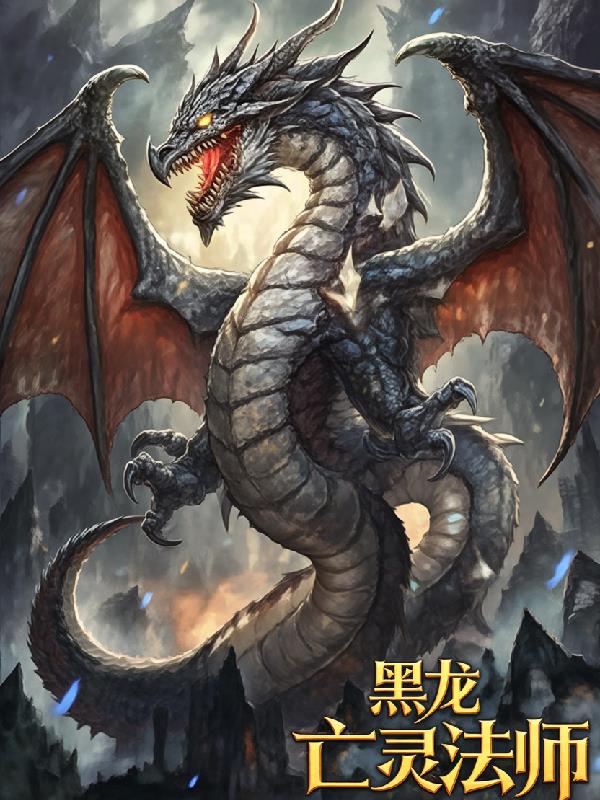
Chapter 64: Dangerous Friends
Remembering that he hadn't inspected the territory for many years, Sakavi felt it necessary to take a good look at what the results of years of construction were like. A few days later, on a misty dawn, crystal-clear water droplets hung all over the black basalt walls of Aguerike. Sakavi spread his wings from the top of the palace and began his inspection of the territory.
It is a fact that for the residents of the territory, giant dragons are very common, even annoying creatures. Since the first batch of students moved into the Aguerike Dragon Beast Academy twenty-three years ago, they have never stopped causing destruction throughout the Bohe Plain. Nearby villagers often catch colorful juvenile dragons and take them to Kelaosuna to exchange for money.
The one who has the most opinions on this is Tali. Half of the tasks of the Security Court are dealing with the five-colored dragons setting fires and stealing things everywhere. Many five-colored dragons even play tricks with setting fires, such as setting fires from a distance, alcohol ignition, and magnifying glass focusing. When Molakes was young, he even stole an ogre's cow at night and sold it to the Aguerike port area the next day, lying that it was imported from the Luoka Plain.
After years of effort, Sakavi finally admitted that everyone's prejudice against five-colored dragons is for a reason, and even the gold dragon dragon-beasts have been corrupted by this group of five-colored dragons, following them to set fires and steal things everywhere. However, metal dragons prefer to put stolen livestock in the village next to the victim. They actually don't lack money or food; they just like to tease people.
Later, Sakavi ordered severe punishment for this group of children, and as a result, an interesting phenomenon appeared: five-colored dragons painted themselves to impersonate metal dragons, and the other side did the same. Sakavi, who was helpless, had to order them to be sent on a bunch of tasks so they wouldn't have time to come back.
Standing on the city wall and looking down, the streets are crisscrossed like a chessboard, figures of different races shuttle between them, shops are lined up, carriages and horses are clattering, and there is a set of efficient operating rules in the clamor. In a small alley, a few juvenile dragons no longer than three meters long were sneaking around observing something, and after a while, they disappeared under the drive of the law enforcement officers.
In Sakavi's entire governance structure, checks and balances are always the first priority, and law enforcement officers naturally do not have the privileges of other places. In the Viceroy's territory, their duties are more similar to a combination of city management and traffic police. Due to the special situation of the territory, they are also responsible for the adjudication of various disputes between small vendors or residents.
Flapping his wings and flying out of the city, the Bohe Plain is like a huge golden tapestry, with mature wheat rippling in the wind. On the east bank, the chants of lizardman farmers and the hammering of craftsmen are intertwined into a rigorous movement; on the west bank, the smoke from the ogre villages is curling up, and the market in the town has long been open, full of rough vitality and life. The gently flowing Bohe River nourishes this land full of abundance and order.
Sakavi let out a satisfied low roar, his wings stirring the wind and clouds, and flew upstream. The terrain gradually rose, the prosperous plain was left behind, and it was replaced by the hilly mining area.
This is another scene. The low mountains have been excavated into stepped mine tunnels, like scars on the earth, but they also emit the atmosphere of industry and steam. Countless kobold miners are busy like worker ants, and rail cars rumble on the cableways, transporting large amounts of coal down the mountain. This is a rough and powerful order.
Sakavi adjusted the angle of his wings in the clouds and lowered his flight altitude. When flying over the confluence of the Black Water River and the Bohe River, the scene below is enough to make any first-time visitor hold their breath. Black Iron City, like a steel giant crawling on the earth, is breathing heavily and powerfully.
The Bohe River is muddy and yellowish, while the Black Water River is just as its name suggests, flowing with dark water from the deep layers of the mining area. The city is built in the triangular zone of the confluence and is surrounded by sturdy basalt walls. The walls are no longer simple defensive works; their tops are laid with thick metal pipes, occasionally spitting out white steam.
Viewed from the air, the transport network resembled the blood vessels of a giant beast. On the river, countless barges were linked end-to-end like moving islands. The ore cart tracks descending from the hilly regions were like steel tentacles, extending directly into the wharf's unloading zones. Salt ships from downstream and ocean-going merchant vessels carrying grain from overseas intertwined with fleets loaded with coal and ore, carving countless intersecting white wakes across the river surface.
The core area of the city is the source of its power. Huge coking plants are like rows of black brick beehives, with rolling yellow smoke constantly rising from the top, converting coal into coke needed for metallurgy. Next is the continuous smelting area, where blast furnaces are like steel giants standing between heaven and earth, dark red all over, occasionally spitting out dazzling golden flames and dense black smoke from the openings at the top; that is iron ore being smelted into pig iron.
Copper furnaces and tin furnaces flicker with even more stark white flames, rising with unique blue-green smoke. All these smokes gather into an eternal gray haze mixed with the smell of sulfur and metal above, filtering the sunlight into a hazy, industrialized dusk.
The city's functional zoning is clearly cruel. On the wharf, strong ogre porters shout chants, forming a moving river of flesh. In the smelting area, minotaur craftsmen wear protective leather, using long poles to stir the boiling metal melt. And between the intricate tracks and pipes, countless goblins shuttle like worker ants, carrying out maintenance and upkeep.
Every race is in its designated position, doing its best for the operation of the entire system. Looking at this city with a bit of steampunk style, Sakavi felt very proud in his heart. It was precisely because he overruled all objections and chose this proposal from Su Lai De that this city exists today.
In the center of the city, a fortress built entirely of obsidian and steel stands majestically. It is the direct extension of Sakavi's will, the Furnace Heart Mage Tower. It does not have the traditional elegant spire style, but imitates the form of a blast furnace, rough, cold, and its top burns with an undying magical flame day and night. Like the eyes of a black dragon, it reminds all living beings who is the creator and master of order.
However, on the top of the clock tower of this castle, there seems to be an extremely discordant existence. The white holy robe and the black rough building are somewhat out of place. His posture is not the prying of an invader, but more like a scholar examining an ancient mural, trying to interpret the wisdom and logic behind this unusual city.
"Bishop Ignatius, you are already free, why are you still staying here?"
"Ah! You are right, I am indeed free, so I can go anywhere I want to go, and you can no longer restrict my freedom."
"But this is my territory, without my order, even my subordinates cannot enter here at will. How did you get in?"
"I told your subordinates that I was a guest invited by you, and they let me in directly, and even entertained me enthusiastically. To be honest, your subordinates are not only very polite, but their living conditions also seem to be quite good. Ten hours of working time, and they can rest for one day after working for four days. This treatment is also very rare in human countries."
"Did they not take you to the places where they have leisure and entertainment? I have personally designed sports projects for them, and even specifically invited people to teach them music and literacy. In the place where they stay, there is a library built, which is full of books purchased from humans. They like reading knight adventure novels very much."
"I didn't notice this, perhaps they thought it was not worth mentioning! What I am curious about is that according to intelligence, you have no experience living in human countries, but your understanding of order is very similar to humans, and even exceeds them."
"If a friend asked, I would say that the power of order is much stronger than barbarism. Although it is easy to decay and lag behind, for me who has no deep foundation, when the residents get used to this kind of life, letting them return to that kind of life where they work hard all day and still can't fill their stomachs is no different from letting them commit suicide.
The Viceroy's territory welcomes your arrival at any time, but I think you should go back to your diocese. Being too close to a black dragon of a hostile force is not a good thing, and you know you are already very ostracized by the church."
"Respected Viceroy, did you forget that my cathedral has been burned down by you? I have nowhere to go, and currently, the Chiguang Sect has given up on the wanted order for you."
"Do you want me to build a new cathedral for you? Don't forget, the Viceroy's territory is the territory of the War God Church, and I dare not offend them. Can you reveal to me a little bit about what kind of deal exists behind the Chiguang Sect revoking the wanted order for me?"
"Sorry, due to my duties, I cannot mention any details about this matter, but I think you should go and fulfill the agreement with our Chenguang Sect."
"I have my own arrangements for this matter. How long do you intend to stay here? You wouldn't really be interested in this place, would you?"
"You are right, I came to conduct an evaluation survey to see what the strength here is really like. You know, the Chiguang Sect is not that reasonable. You are not the first five-colored dragon to establish order, and of course, there are many people better than you. But every force where all races coexist fascinates me just the same, and precisely because of this, I am so ostracized."
"My friend, the chat ends here. Take the compensation you deserve and rebuild your cathedral! If this matter is thoroughly resolved, I will invite you to Aguerike as a guest, but not now."
"I think you will. The gears of fate will not stop for a certain thing, but will only turn in ways that ordinary people cannot predict. Young black dragon Viceroy, good luck."
Bidding farewell to this strange Bishop friend, Sakavi returned to Aguerike and began to check Gelapu's confession. After being plotted against many times, Sakavi was extremely careful about anything that could cause danger.
According to Gelapu's account, he was discovered and chased by the Scarlet Light Sect as soon as he entered the Ainuoteer plane. Unable to contact the Viceroy's territory, he hid for nearly ten years, during which he also established friendships with many local forces. This neat text made Sakavi feel even more heartbroken the more he read it. His own excellent and loyal subordinate failed to break through to Legendary because he was involved in some kind of conspiracy against him. ===== CHAPTER 65 =====
End of Chapter