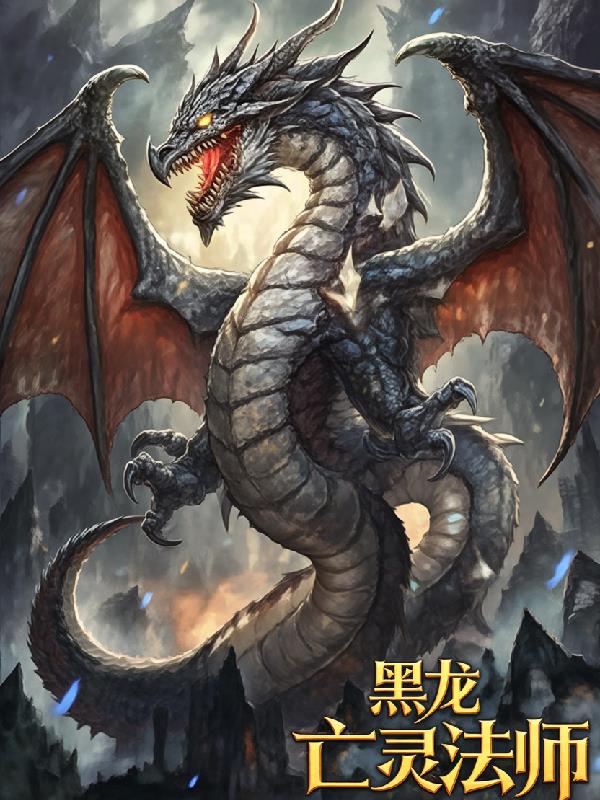
Chapter 7: Post-War Planning
During the time after fighting the swamp monster, Sakavi was always recuperating, and the daily operation of the lizardman tribe was mainly Velanse's responsibility.
Using the excuse that Sakavi needed to recuperate, she took over everything, not only managing the lizardman tribe in an orderly manner but even making nearby murlocs, swamp-toads, snake-people, and other tribes compete to come and submit.
Sakavi for a moment actually thought she was also a transmigrator, until Sakavi tentatively asked if there was Maotai liquor here, and Velanse said that if he dared to drink, she would break his head. Sakavi was finally convinced that he had thought too much.
During the time of recuperation, the bored Sakavi began to review the various details of the battle with the swamp monster. The swamp monster's development of water-type magic gave Sakavi a very big shock. It was only at the Mid-Level magic level, but it dealt damage that only a High-Level mage could possess.
For the various moves used by the swamp monster, Sakavi planned to try them out after his wounds healed. He possessed stronger magic affinity, so there was no reason to lose to a Mid-Level magical beast in magic competition.
Compared to magic attacks, the swamp monster's melee combat strength was truly jaw-dropping. He originally thought that a swamp monster with a huge body should be better at melee combat, but he didn't expect that it would only release acid and whip with tentacles in close combat.
Realizing this, Sakavi changed his strategy, biting its tentacles off one by one, and then killing it.
Hearing the constant wailing, the various magical beast races around must have recognized the reality. Facing a black dragon that had just entered the adolescent stage, the first reaction of most magical beast races is to resist. If it were a black dragon that could easily kill a swamp monster and whose methods were unusually cruel, then no one would dare to be the first bird.
After recuperating for half a year, Sakavi planned to go out for a walk. If he hadn't seen Velanse beside him, Sakavi even felt that he had gone to the wrong place.
The lizardman tribe in front of him no longer had the dilapidated scene when he first arrived. The surrounding residential areas were planned wooden houses, and the walls were even painted with green paint.
And the breeding area was enclosed into small grids, and the lizardmen were sprinkling things like nutrients into them. When he saw the planting area, Sakavi even suspected for a moment that he had transmigrated back.
Looking at the planting area like a vegetable garden, Sakavi was shocked and couldn't speak. But Velanse said that this thing was very common before the elves left, and it was just Sakavi's ignorance.
"Smell it and see if there is still that pungent fishy stench in the air?"
Sakavi had actually noticed the lack of fishy stench a long time ago, but he felt that Velanse should have used some kind of druid spell to temporarily suppress that suffocating fishy stench.
"Indeed, it's gone. I didn't expect the Druid Path to be so magical."
"You are wrong about that. This is not a druid spell, but a regulation that lizardmen must take baths diligently, can only defecate in designated places, and plant plants that can absorb the fishy stench."
Thinking that he hadn't taken a bath for half a year, Sakavi was instantly embarrassed and wanted to find a crack in the ground to crawl into. Suddenly, he saw that the place that was originally the altar had been transformed into a huge plane, and there was a large round plate in the center.
Sakavi asked what that was for, and Velanse said it was specially designed for Sakavi, making it convenient for him to hold meetings or meet personnel from other forces on it. It had to be said that Velanse's thoughtfulness was truly admirable.
After visiting the lizardman tribe, Sakavi decided to go to the swamp monster's lair with Velanse. During this period, Velanse had been sending lizardmen to guard here to prevent other forces from approaching.
Just as he arrived at the cave entrance, Sakavi smelled the scent of gold coins. He was poor as a church mouse in his previous life, but now he could finally be considered a rich man. When he walked into the depths of the cave, Sakavi looked at the various treasures piled up like a small mountain and couldn't take his eyes off them for a moment.
In the end, reason overcame greed. Sakavi said that those who see it have a share, and the two would split it in half. Velanse insisted on not wanting it, but Sakavi insisted on giving it, so she could only reluctantly take away the various magic tools, leaving the gold coins and various gold and silver utensils, which made Sakavi exceptionally excited.
After distributing the spoils, Sakavi decided to gather all the races here to swear sovereignty and sign a contract. After everyone arrived.
Sakavi took out multiple contracts written on paper and asked everyone above the Mid-Level from races other than the snake-people to sign one. The priest serving as chieftain must step down.
Seeing that Sakavi didn't seem to intend to give them a contract, the snake-people were instantly panicked. Seeing that the snake-people's psychological defense had completely collapsed, Sakavi took out the scales and let them come forward one by one to accept the gift.
After converting the snake-people, Sakavi called the lizardmen who had contributed in hunting the swamp monster and selected three warriors including the chieftain. Then he called the lizardman priest, but he didn't expect that no one would respond after calling several times. The lizardmen present looked at each other.
This scene made Sakavi confused for a moment. It was Velanse who reminded him in a low voice that the lizardman priest had been blown to pieces by a water cannon when ambushing the swamp monster.
Hearing the fate of the lizardman priest, he actually felt a bit sorry for them. However, Sakavi's skin was not generally thick. He directly skipped this question and converted the remaining two warlocks and three warriors into vassals. And he stated his principles to the subordinates present.
"If there is a rebellion among the subordinates, I only punish the leader. I don't need incompetent subordinates. If you are strong enough or have made contributions to me, you can be converted from a slave to a vassal."
After saying that, he began to let his subordinates bring people to renovate this lair. For Velanse's aesthetic and design level, Sakavi trusted it very much. He decisively handed over the task of commanding the renovation to her.
Three months later, looking at the renovated cave, Sakavi felt that he had made a big profit. The cave not only took into account safety and comfort but also set up ventilation holes, so it wouldn't produce a fishy stench due to the long time.
Even in the place where he slept, a planting area was left behind. Velanse's explanation was that dragons can gather magic power, and this area can not only be planted with magic herbs but also effectively reduce the impact on the environment.
Of course, what Sakavi was most satisfied with was the round bed made of gold. The desire for treasure is engraved in the genes of dragons, and no dragon can refuse a large bed made of gold. Under the bed was a secret passage, so he could slip away from inside when someone blocked his door.
After renovating Sakavi's residence, Velanse began to plan the production and life of the major vassal tribes. Looking at Velanse's busy figure, Sakavi persuaded her to take a rest and not be so anxious.
Velanse said that as an elk, no one had ever given her a chance. This time she could give full play to her imagination, and she wanted everyone to know that elks were no worse than elves.
After more than a year of renovation, looking at her masterpiece, Velanse was extremely satisfied. She finally had time to count the stars and chat with Sakavi in the wilderness again.
"Sakavi, how about I continue to renovate your residence after you grow bigger?"
"Who can say for sure about the future? If I can grow to adulthood, I want to go outside and see, and walk around in other planes."
"Other planes? I still want to stay in that forest. When you return from your travels, don't forget to tell me the stories from outside."
"I'm afraid that by then I will be an evil dragon that everyone shouts to beat. You will probably drive me out of your house when you see me, hahahahahaha."
"Hahahahaha, you are still so interesting. I believe that a dragon as interesting as you won't go to my house to rob."
In the next half year, Velanse introduced in detail the various forces of other planes she knew, as well as the situation of this plane. If she had ambition, Sakavi didn't doubt that she would be a very powerful person.
When Velanse decided to go back, Sakavi insisted on sending her back and asked for a leaf unique to that forest as a souvenir. This made Velanse very confused. It was only a three-day journey for Sakavi to come here, so it wasn't like he couldn't come anytime.
Sakavi knew in his heart that the next time the two met, it might be on the battlefield. Different paths do not conspire. Sakavi didn't want to be an obscure black dragon lord. If he wanted to become stronger, he had to learn magic.
Magic all has inheritance. There are quite a few intermittent ones in the Dragon Scripture, and there are none that touch higher levels.
Other forces are even less likely to provide magic knowledge to chromatic dragons. However, there are exceptions to everything, and the Cult of the Dragon, which belongs to the same camp as chromatic dragons, is one of them. The Cult of the Dragon mainly uses necromancy.
Although the Cult of the Dragon is also full of calculations against dragons, this is the only complete magic knowledge he can contact so far.
However, Sakavi didn't intend to look for the Cult of the Dragon now. If he went with his current strength, he would only be made into an undead dragon on the spot. After growing to the adolescent stage and getting through the age prone to premature death, he would have room to bargain when he went to look for the Cult of the Dragon.
In the days to come, Sakavi planned to conduct systematic training for his vassals. Although their management and construction levels were worrying, Sakavi considered himself to have been in the 21st century after all. Training the army and bullying the surrounding races shouldn't be a problem.
First, Sakavi let the lizardmen and murlocs try to manufacture a few ballistae according to his drawings. It wasn't just that Sakavi's memory was bad, or their technology was too poor. The ballistae made were quite poor in both range and durability.
After continuous renovation, ballistae that met Sakavi's requirements were finally made. Sakavi immediately ordered mass production and ordered the murloc and lizardman tribes to build high platforms that could place these ballistae.
At the same time, Sakavi ordered them to build walls with rotten mud mixed with special seeds outside the tribe, enclosing the tribe. The vine plants that grew up with druid spells instantly covered the entire wall, and the wall became sturdy.
While they were working, Sakavi was not idle. Sakavi successfully replicated the teenage version of the Zhuge crossbow. Murlocs are short and their strength is not great, so they can't pull hard bows. Equipping them with this kind of energy-storing crossbow is just right to exert their strength.
For the strong lizardmen, Sakavi let the warriors each carry five javelins, a round shield, a bone spear, and form a five-person group with an archer and a warlock. Under Sakavi's personal guidance, in less than a month, the five-person combat group had already begun to take shape.
Next was the mode of three-person warrior groups, with warlocks and archers attacking collectively. The lizardmen with training foundations quickly learned this mode.
Regarding the situation where shamans used to work part-time as warlocks, Sakavi made adjustments. Warlocks and shamans are two different professions. Unless they are gifted, they can only choose one.
According to the magic affinity attribute of the warlocks, let them only practice one or two offensive spells, and the number of warlocks instantly increased a lot. In this way, they had the power to fight against harpies or gnolls who often came to loot.
Murlocs are different. Murlocs are directly in a three-three system. Murloc intelligence is low, and they can't learn more. Besides, melee combat is basically a collapse at the first touch. It's already good to engage in sneak attacks and reconnaissance. On the contrary, murloc warlocks, collectively releasing water arrows or fireballs from a distance, have quite good effects.
As for swamp-toads, they are good at traps and illusions, and their use of tools is not as good as murlocs. Sakavi believes there is no need to interfere. ===== CHAPTER 8 =====
End of Chapter