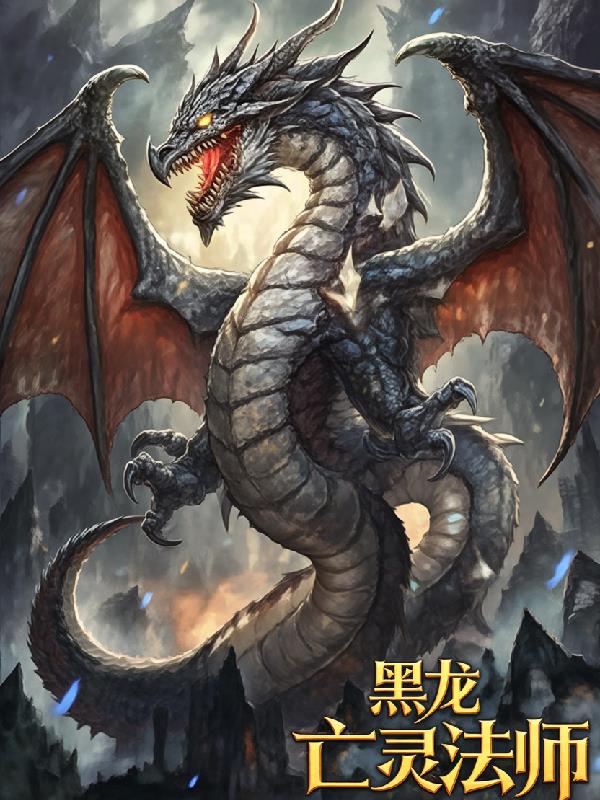
Chapter 73: The Lich Scholar
The ink-green poisonous fog was as thick as substance in the depths of the swamp, and the air was filled with the sweet, nauseating stench of rotting plants. The black mudflats bubbled, releasing nerve-paralyzing poisonous gas. This was a hotbed of death and a source of negative energy; for necromancy, it was an excellent environment for spellcasting.
On this calm evening, a pressure that made people unable to breathe suddenly came from above the swamp. There was no sound, yet it made the hunters tremble uncontrollably. Even killers as powerful as the ghost-face mushrooms had to pretend to be harmless and lower their own presence.
At this moment, a withered humanoid creature wearing a hooded robe appeared on a rock in a panic. He seemed very unfamiliar with his location, constantly looking around. The bright light on the bone staff in his hand indicated his powerful strength, while also exposing his position in the thick fog.
"Dear Lich, what are you looking for? I might be able to provide help. The reward is just your life and property."
"Black dragon, I have no grudges against you. There is no need for us to fight. How about you let me go? The research results I have here are all yours. You must know that knowledge cannot be bought with money. If I destroy it, you will get nothing."
"Then if I extract your soul and find a container to seal it in, can I ask you for knowledge at any time?"
"Black dragon, your greed is too unrestrained. You will pay the price for this. I do not want to fight you this time. You stop him." Having said this, two undead-form mud monsters suddenly emerged from the swamp. Their rotting bodies looked exceptionally terrifying, but for a necromancer, this was not much of a threat.
When they rushed over with claws and teeth, an energy spear containing pure decaying power directly shattered their phylacteries. Within seconds, the two mud monsters turned into a pool of rotten mud and collapsed with a boom. However, the time this bought was enough for the lich to escape this dangerous swamp. Yet, fate seemed to play a joke on him again.
"Forgot to tell you, I have set a seal on this swamp. Only one intelligent creature can leave alive. The name of this seal is 'Silent Corridor,' specifically designed to deal with those who are good at running away."
Seeing that escape was hopeless, Nasoge took the initiative to attack. His mouth, composed of wraiths, opened and closed silently, emitting a "Wail of the Dead" that acted directly on the soul layer. Wherever the sound waves passed, the mudflats exploded, and countless painful souls drowning within were forcibly extracted, turning into arrows of wraiths, shooting toward Sakavi like a green rainstorm.
Sakavi did not even move. He let out a low dragon chant, and a translucent barrier of pain composed of giant wailing faces instantly constructed itself in front of him. The wraith arrows hit the barrier, but instead of penetrating, they were swallowed and assimilated by the barrier, making it thicker and more solid.
The ghostly fire in the lich's eye sockets flared brightly, and two gray, withered rays shot toward the black dragon. This was the ultimate manifestation of an instant-death spell, capable of directly stripping away the target's vitality, causing flesh to wither and the soul to disintegrate. Facing this massive threat, the black dragon directly swapped positions with a venom corpse. The moment it was hit, the corpse emitted a heart-wrenching wail, and its body gradually began to fester and wither.
Nasoge was finally moved. He realized that the black dragon's attainments in necromancy were far beyond his imagination. He used his final trump card, holding the pulsing dark heart high with both hands: "Plane Assimilation! With this as the core, I am the swamp, and the swamp is me!"
The negative energy of the entire Withered Swamp began to boil, gathering toward him crazily. His form expanded rapidly, intending to temporarily merge with the death laws of the entire plane, transforming into a semi-plane consciousness that could not be killed by conventional means.
"Playing with rules? Interesting. But your understanding of 'death' is too narrow."
"Territory · Stripping."
There was no brilliance, no explosion. Only an absolute, conceptual mandatory force.
The moment the word-spirit was uttered, with Valakar as the center, a kind of "definition" was forcibly rewritten. The plane's death rules that were merging with Naxos were forcibly torn and stripped away. It was as if a pair of invisible giant hands had roughly pulled the lich off the "plane avatar" web he was weaving.
"No—!" Nasoge emitted a terrified soul scream. He felt that his connection with his phylactery, the dark heart, had become weak, and his connection with the swamp had been completely severed. His expanded form shrank and dissipated rapidly as if leaking air, turning back into the fragile body composed of venom and withered bones.
"Ever since I fought a certain devil last time, I have made comprehensive changes to the rules for borrowing external power. In the 'Silent Corridor,' the rules can be adjusted at any time according to the situation."
Having said this, Sakavi used the gap where the lich was suffering from the backlash of the rules and his magic power had not yet recovered to directly seal his soul. After receiving no response from the soul, the body collapsed and disintegrated instantly. Finally, the lich's soul, amidst his constant cursing, was sealed into a diamond-shaped magical green crystal that had been prepared long ago.
The lich's treasure vault was located in a massive underground cave illuminated by negative energy crystals. The air was bone-chillingly cold, carrying a mixture of parchment, preservatives, and soul dust. Valakar walked through it in humanoid form, Sakavi's gold-like vertical pupils sweeping over rows of bookshelves made of oak and beast bones, his eyes filled with a thirst for knowledge.
"Soul Weaving Outline": A thick-skinned book tanned from the skin of a magical beast. It systematically expounded on how he "wove" fragmented soul shards into more powerful wraiths, and even gave them simple intelligence. This had already surpassed simple enslavement and touched the edge of creating undead consciousness.
"Negative Energy Ecological Cycle Theory": A series of complex charts and papers, detailing how the Withered Swamp served as a natural negative energy reactor, automatically breeding and maintaining specific undead creatures (such as venom corpses, skeletal raptors). This was equivalent to a design blueprint and operation manual for an automated undead arms factory.
"Plane Anchor and Death Rule Resonance": This was an extremely precious research manuscript. Nasoge attempted to analyze the rules of the plane itself and tried to resonate his phylactery with it, to achieve the "semi-plane avatar" effect from the previous battle.
In the laboratory, Sakavi found some interesting things: dozens of crystal jars sealed with magic, storing purified special souls of different attributes, from red soul fire filled with anger to blue ghostly light filled with despair. These were precious consumables for performing high-level necromantic spells.
In several specially made preservative containers, some undead "prototypes" that had undergone special treatment were soaking, such as a lich with a negative energy crystal implanted in its heart position, and a skeleton with micro-runes carved all over its bones. They were in a dormant state; once activated, they would be ready-made elite units.
According to the unfinished manuscript, this lich was currently researching how to replicate his own soul and inject it into other liches, thereby realizing an extension of his own will to do some relatively dangerous things.
This experiment made Sakavi very interested. The flesh puppets he made had not been able to improve their combat power because their soul strength was not enough, and this problem had never been solved.
In fact, in this multiverse, various puppet creations were not strange things. Many powerful dynasties could even manufacture elemental or mechanical puppets, whose combat power could rival demigods and also possessed a certain degree of autonomous thinking ability.
Needless to say, they must have been injected with sound souls, but Sakavi had only heard of such puppets. The few special souls left by the lich seemed to be usable to try to manufacture a few special puppets.
However, a place with a large number of unknown dangers was not a good place for experiments. After packing the entire laboratory into his domain, Sakavi began to rummage through the lich's belongings. No one who could be a mage was poor.
Not to mention the money needed to buy materials for various experiments, just making a few magical items for others, or selling a few objects engraved with inscriptions, could earn a lot of gold coins. Unless they were from a wealthy family, basically everyone knew a few ways to earn money.
In the lich's treasury, Sakavi not only found a large amount of gold coins but also saw some gorgeous jewelry that contained vicious curses. Nasoge did not collect them for wearing, but to harm certain jewelry merchants or human nobles. This was also one of the common means for the chaotic evil alignment to obtain wealth.
Besides such ordinary items, there were dozens of perfectly cut crystals, each sealing a powerful and pure soul inside. Such soul prisms were hard currency in the Astral black market. Many large forces of the lawful alignment needed to manufacture puppets or other intelligent creations, and besides purchasing souls from the Nine Hells, they were mainly provided by necromancers, after all, the Pantheon monopolized the souls of ordinary people.
In an inconspicuous corner, in a box, a large number of flawless rubies, black gems, etc., were stored. They were not only worldly wealth but also cornerstones for storing magic power, serving as spell catalysts, or constructing permanent magic arrays. It could be seen that each one had been carefully selected, without any flaws, and could be used directly.
The most surprising thing was that there was not a single weapon here. It seemed that this lich was a pure scholar. No wonder the entire upper echelon of the plane had been uprooted. He, a Legendary Rank lich, was actually hiding in the depths of the swamp doing experiments, probably because there was nowhere else to go.
However, Sakavi had always detested the behavior of conducting magical research by harming intelligent creatures and never allowed his subordinates to engage in such activities. No matter how valuable the lich was, he would not accept him. Usually, various forces of the lawful alignment used kuo-toa for research. Since they all said that these were not intelligent creatures, Sakavi had no opinion. ===== CHAPTER 74 =====
End of Chapter