Chapter 475: Homeward Road: A Handful of Yellow Soil, Half a Lifetime of Dust
In the early hours of a July night in 1993, Li Ping'an suddenly woke up from a dream.
There was no cause, no nightmare, just his heart suddenly sinking, as if grasped by an invisible hand and then abruptly released.
He opened his eyes, looking at the blurred outline of the ceiling in the darkness, hearing only the faint hiss of the air‑conditioner's airflow and his own still‑racing heartbeat.
Beside the pillow, Lin Xueqing slept soundly, her breathing even and long.
Li Ping'an rose gently, barefoot, and walked to the window. Pulling back the curtain, the night sky over Shenzhen showed no stars, only the distant buildings' neon tinting the horizon a vague purplish‑red.
The city he had struggled in for fifteen years was now as quiet as a coiled giant beast, breathing in the night.
He suddenly recalled the Old Locust Tree outside his home's courtyard wall.
It had been fifty‑two years.
That winter of 1941, the locust's bare branches thrust toward the gray‑hazy sky, crows cawing above and unsettling the heart. A ten‑year‑old him knelt before the earthen kang, gripping his mother's withered‑like hand, cold as a piece of old tree root picked from a late‑autumn riverbank.
"Ping'an… find your sister… Pingle…"
His mother's final words were halting, breath like a wisp. Her eyes were already clouded, yet she stared at him intently, as if to nail this last request into his son's bones with her gaze.
Then that hand let go.
"Want to go back?"
Lin Xueqing woke at some point, slipped out in her nightgown, and came over, her voice still hoarse with sleep.
She knew her husband too well—this man who never hesitated in ruthless business decisions, only when thinking of his home did his eyes reveal this almost fragile expression.
Li Ping'an did not turn around, he simply nodded.
"Then let's go back," Lin Xueqing placed her hand lightly on his shoulder, "repair the parents' grave, erect a proper tombstone. We… owe them an explanation."
Indeed, an explanation.
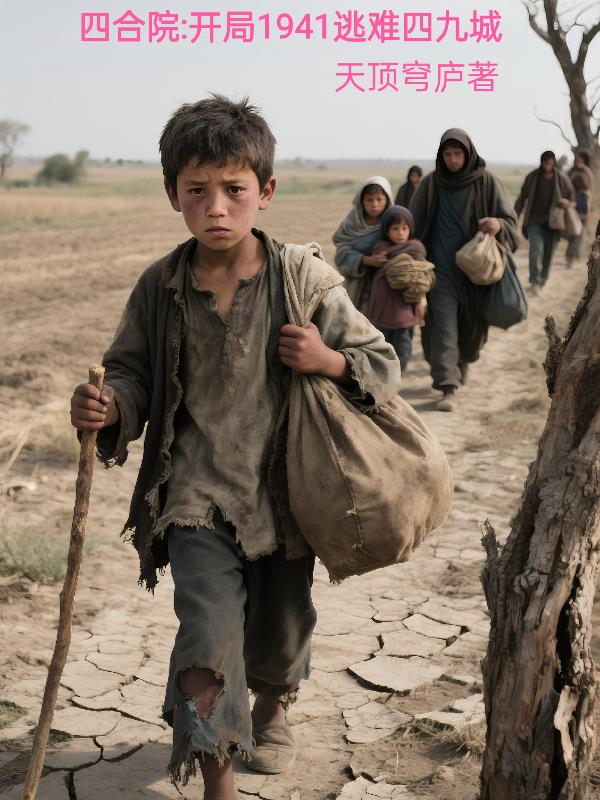
In 1942, Henan suffered a great drought, the earth turned red for thousands of miles. The people of Li Family Village either fled or died. A ten‑year‑old Li Ping'an wrapped his parents in a tattered grass mat and dug a shallow pit in the hilltop mass burial ground.
There was no coffin, no incense, not even a decent wooden board for a tombstone; they only placed a stone on top, fearing wild dogs would dig it up.
He knelt before the earth mound and kowtowed three times, yellow soil clinging to his forehead.
Then he turned and set out on the road to find his sister.
That walk lasted half a century. Though he had once brought his sister Pingle back that year, it was in a hurry.
Three days later, a black Crown sedan rolled out of Shenzhen, heading north.
Li Ping'an brought no secretary, no bodyguard, only asked driver Xiao Wang to drive; he and Lin Xueqing sat in the back seat.
The luggage was simple: a few changes of clothes, some cash, and two bottles of fine wine—his father had loved a couple of sips in life, though back then they could only drink cheap potato wine diluted with water.
The car passed Shaoguan, and the scenery gradually changed.
The lush greenery of the south faded, giving way to the open plains of the Central Plains. July was the stage of corn ear emergence; outside the window stretched an endless green veil, rippling like waves in the hot wind.
Occasionally, farmers working in the fields could be seen, wearing straw hats, their silhouettes slightly warped in the steaming ground heat.
Li Ping'an rolled down the car window.
A heat wave surged in, carrying the mixed scent of soil and crops—a smell from deep memory. He closed his eyes, inhaled deeply, and felt a sharp sting in his lung, making him wince.
"Almost there," Lin Xueqing grasped his hand.
Her hand was warm, dry, bearing a thin callus from years of holding a scalpel. Those hands, once having saved countless lives under a shadowless lamp, now simply held his gently, as if cradling a lost child.
July on the central Henan plain was as hot as a scorching iron pot.
The car left the highway and turned onto a country dirt road. The jolting began as wheels rolled over deep ruts, kicking up yellow dust. Sparse poplars lined the road, their leaves curled from sun, cicadas shrieking until the world was filled with a restless white noise.
Li Family Village arrived.
No, this was no longer the Li Family Village of his memory.
Li Ping'an pushed open the car door and stood beneath the Old Locust Tree at the village entrance—still standing, only older, its trunk twice as thick, bark cracked like an old man's face.
A rusted iron bell hung from the tree, once used to summon villagers to meetings.
But the village had completely changed.
In his memory, those low earthen houses had mostly collapsed, leaving only broken walls. They were replaced by newly built brick houses, red bricks exposed, some plastered white, with slogans painted in black ink on the walls: "To become rich, have fewer children and plant more trees."
At the village entrance, a few old men played chess under the shade; hearing the car, they lifted their heads to assess. Their gazes held curiosity, caution, and a trace of indifferent detachment toward the outsider.
No one recognized him.
Fifty‑two years were enough to erase that ten‑year‑old starving boy completely from the land's memory.
"Brother, I'm looking for someone."
Li Ping'an walked over, pulled a Hongta Mountain cigarette from his pocket, and offered it to the elders. He tried to let his accent carry a hint of Henan dialect, but years abroad had left it indistinct.
"Please, go ahead," a toothless old man said, taking the cigarette and holding it near his ear.
"In Li Family Village, was there ever a household with the surname Li, the head named Li Laoshi, daughter‑in‑law surnamed Wang…" Li Ping'an paused, "In 1942, they starved to death."
The elders looked at each other and shook their heads.
"1942? That's too long ago," the toothless old man squinted, "Back then, countless people starved. The mass burial ground east of the village held so many we can't count. What you're…"
"I am their son," Li Ping'an said, "Back then… we fled the famine."
The air fell silent for a moment.
The elders' gazes shifted, from indifferent to a complex appraisal—surprise, sympathy, and something indescribable.
"Please wait," the toothless old man stood, shouting into the village, "Lao San! Lao San's family! Come out and identify yourself!"
A man in his fifties emerged from the village, dark‑skinned, wearing a faded blue cotton shirt. He approached Li Ping'an, scanning him up and down, his brows furrowing tighter.
"You… really are Ping'an of Li Laoshi's family?"
"Yes," Li Ping'an nodded, "You are…"
"I'm Shuan Zhu!" the man suddenly got excited, "the Shuan Zhu from next door to Uncle Li Da Bo's house! When we were kids we used to go down the river together to catch fish!"
Li Ping'an was stunned.
Deep in his memory, there seemed to be such a shadow—a snot‑dripping boy two years younger, always running behind his heels. Yet the wrinkled man before him could not possibly match that shadow.
"You… you're still alive?" Shuan Zhu's voice trembled, "That year of famine, everyone said your family was wiped out…"
"I'm alive." Li Ping'an took a deep breath, "My sister Pingle is also alive."
"Ah! Ah ah!" Shuan Zhu slapped his thigh, turned and shouted to the village, "Everyone come out! Come see! Li Laoshi's family's Ping'an is back! Not dead! Alive and back!"
The tiny Li Family village was in an uproar.
The elders leaned on their canes, the middle‑aged put down their farm work, and the children curiously gathered, crowding the space beneath the Old Locust Tree at the village entrance until it was packed.
Li Ping'an stood surrounded, unfamiliar faces approaching, heavy with the smell of sweat and tobacco, eyes openly curious.
"Is it really Ping'an?"
"You look a bit like him… but the clothing, the bearing…"
"Heard you got rich out there?"
"Came back driving a small sedan!"
Voices overlapped, buzzing.
Li Ping'an felt dazed. The rural accents, the faces, the scent of earth mixed with livestock dung… everything was strange, yet a faint resonance echoed from a corner deep in his memory.
Shuan Zhu pushed forward, grabbed his hand: "Come! Go home! Sit at my place!"
The so‑called "home" was three newly built brick houses. In the main hall stood an Eight Immortals Table, New Year pictures hung on the walls, and a plump old lady was busy at the Stove; seeing guests, she hurriedly wiped her hands with an apron.
"This is my daughter‑in‑law," Shuan Zhu introduced, "Quick, boil water, brew tea! Bring out that packet of jasmine tea from the cupboard!"
The tea was a cheap jasmine brew, its fragrance strong.
Li Ping'an cradled a coarse porcelain bowl, listening as Shuan Zhu recounted the years.
After the great drought of 1942, villagers died or fled; by the Japanese surrender in 1945, Li Family village had fewer than twenty households left. After the founding of New China, people gradually returned; land reform, cooperatives, the Great Leap Forward, the three‑year difficulties… Shuan Zhu's father had starved to death in 1960.
"My dad, before he died, said that if your family had all fled the famine together, maybe…" Shuan Zhu shook his head, not finishing the sentence.
Li Ping'an listened in silence.
These hardships he had lived through, yet also seemed untouched. When he had traveled back in 1941, the memories and emotions of the ten‑year‑old original self surged, nearly drowning him. But ultimately, he was not that boy who had starved on the Henan plains until his eyes turned green.
He was Li Ping'an, a soul from the future, bearing this body's memories and debts.
"The graves on the back hill…" he asked.
Shuan Zhu's face darkened: "The mass burial site over there was leveled long ago. In 1958, during the big steel smelting, the stones from the graves were taken to the blast furnace. Later… later they disappeared."
The tea cup in Li Ping'an's hand paused briefly.
In the afternoon, Li Ping'an still went to the back hill.
The so‑called hill was merely a mound, a few dozen meters high, overgrown with thorns and wild grass. Shuan Zhu carried an iron spade ahead, leading the way, while Lin Xueqing held a black umbrella, shielding her husband from the scorching sun.
"Probably… right here." Shuan Zhu stopped on a slightly level slope, pointed with his spade, "I remember when I was a kid there were many graves here. Later they were leveled, we planted sweet potatoes, then peanuts, now it's fallow."
Li Ping'an looked around.
No tombstones, no markers, not even a tree for reference. Only wild grass swayed in the hot wind. In the distant fields, corn was being irrigated, green to the eyes.
1952.
His parents lay beneath this yellow earth, their exact location now unfindable.
He suddenly recalled that morning—spring 1942, perhaps March or April. Dawn barely breaking, he mustered all his strength to dig a shallow pit and placed his parents side by side inside. In his mother's hand clutched a small piece of hardened mixed‑grain bun, her last ration, left for her son.
He covered it with earth, knelt and kowtowed.
The skin on his forehead was scraped by the coarse yellow soil, bleeding, mixing with tears, dripping into the freshly turned mud.
Then he rose and walked away without looking back.
He did not cry out—by then he was so famished he lacked the strength even to sob.
"Let's make it here."
Li Ping'an chose a spot sheltered from wind and facing the sun. Shuan Zhu called several village youths, and they began digging. The iron spade cut into the soil, emitting a dull thud.
Lin Xueqing fetched a prepared green‑stone tablet from the cart, inscribed: "Here lies Lord Li, courtesy name Laoshi, and his late mother, Lady Wang of the Li clan. The unfilial son Ping'an, the unfilial daughter Pingle, respectfully erected."
"What about my sister…" Lin Xueqing asked softly.
"I called last night," Li Ping'an said, "She said… she won't come back. Let me bow for her."
He understood. For Li Pingle, this land held no pleasant memories. Sold at four, all impressions of her parents remained hunger, crying, and separation. She bore no hatred, but also did not wish to return.
The pit was finished, two meters long, one meter wide.
Li Ping'an jumped in, set the tablet upright, and tamped the earth. His movements were steady; despite being over sixty, his back was straight, arms strong—thanks to years of martial training and the nourishment of Spirit Spring Water, his body was healthier than many forty‑year‑olds.
Yet his heart was heavy.
Heavy as if filled with lead.
He placed offerings beside the tablet.
Li Ping'an lit three incense sticks, inserting them into the soil before the tablet. The blue smoke curled upward in the still air, then was scattered by a sudden gust of wind.
He knelt.
Lin Xueqing knelt beside him.
"Father, Mother," Li Ping'an began, his voice a little hoarse, "Your son… has returned."
As soon as the words left his mouth, his throat felt blocked. Fifty‑plus years collapsed into a thin sheet of paper, tearing at the slightest touch.
"Sister has been found; she's doing well, married into a good family, has a son, a granddaughter." He continued, "I… I have also started a family, with a wife, son and daughter. Our line has not been extinguished."
The wind grew stronger, making the wild grass rustle.
"Back then… your son was useless, and you two elders didn't even have a thin coffin." Li Ping'an's voice began to tremble, "Now… now I have money, can give you a proper grave. Yet… I still can't locate where you are…"
He bowed, his forehead pressed against the cold stone tablet.
For the first time in fifty years, this man who had never let business storms redden his eyes, wept.
Not a wail, but a suppressed sob that rose from deep within his chest, like a wounded beast. His shoulders shook, his greying hair tangled in the wind.
Lin Xueqing reached out, gently clasping his shoulder.
She didn't urge him; she just quietly kept him company.
He knelt for a long time.
Until the sun set low, stretching the hill's shadow long.
Li Ping'an stood up, his knees a little numb. He cast one last glance at the brand‑new stone tablet; on the overgrown hillside it looked so solitary, so abrupt.
But it's still better than having nothing at all.
At least, when future descendants come to pay respects, they'll know where to bow.
As they descended the mountain, Shuan Zhu lingered beside them, hesitant to speak.
"Brother Shuan Zhu, if you have something to say, speak up," Li Ping'an said.
"Well…" Shuan Zhu rubbed his hands, "The village school is still a mud‑brick house; it leaks when it rains. The children… lack desks and chairs, lack books. You see…"
Li Ping'an halted his steps.
He turned his head, looking at his childhood playmate. Fifty‑two years had passed; both had grown old. One was a successful entrepreneur, the other a farmer whose face was turned to the yellow earth and back to the sky. Fate was like a river that, at the 1942 crossroads, split and flowed toward completely different horizons.
"I'll donate," he said, "Build a new teaching building, buy new desks and chairs, cover all the children's book expenses."
Shuan Zhu was stunned, then his eyes reddened: "Ping'an… I thank you on behalf of the children!"
"No need to thank me," Li Ping'an looked toward the distant village. "This is what I… owe this land."
That evening, they ate at Shuan Zhu's home.
A simple farmhouse meal: smashed cucumber, scrambled eggs, steamed sweet potatoes, corn‑meal porridge. Li Ping'an ate heartily; it was the taste of memory—poor, but hearty.
After the meal, he took out a thick envelope and handed it to Shuan Zhu.
"This is the money for repairing the graves and erecting the tablet; the remainder is for buying food for the village elders,"
Shuan Zhu declined, but Li Ping'an persisted.
In the end, Shuan Zhu accepted it, his hand trembling slightly.
When they left, the whole village came to see them off. The elders clasped his hand, chattering about the old days; the children stared curiously at the "grandfather" who returned in a small car; the young men stood at a distance, their eyes full of envy and yearning.
The car started.
Li Ping'an, through the window, cast one last glance at Li Family Village. The setting sun turned the red‑brick houses golden, smoke curled upward, dogs barked, children ran.
It was no longer the hellish village of his memory.
Time smoothed the scars and also blurred the memories.
On the way back, Li Ping'an remained silent.
Lin Xueqing also said nothing, merely holding his hand.
The car drove far, and Li Family Village's outline vanished. Li Ping'an suddenly spoke: "Xueqing, do you know what my mother said to me at the end?"
"Wasn't it to have you find your sister?"
"Yes," Li Ping'an said, looking at the fields rushing past the window. "But she added another sentence—'Live well.'"
Three words.
Live well.
"In this life," he whispered, "I joined the army, ran a business, made money, supported the family, as if I were fighting for everything. I feared poverty, feared hunger, feared returning to 1942. Yet standing before my parents' graves today, I suddenly think… if they knew I was 'living well,' they'd be pleased, wouldn't they?"
Lin Xueqing thought for a moment and said, "They would."
"Why?"
"Because you haven't forgotten your roots," she said. "You haven't forgotten where you came from, nor how your parents passed. A person who remembers their origin will never lose the way, no matter how far they go."
Li Ping'an turned his head, looking at his wife.
The sunset's afterglow slanted through the window, casting a warm halo over her graying hair. This woman had walked with him through the toughest years, had seen his most disheveled moments, and had witnessed all his glories.
He suddenly felt that this life was worthwhile.
The car drove into the night.
Li Ping'an closed his eyes, and what rose in his mind was not the new grave on the back hill, but the scene of a ten‑year‑old him kneeling before a mound on a crisp morning in 1942.
Then the image shifted—now himself kneeling before the stone tablet.
The two scenes overlapped, separated by fifty‑two years of time.
He had finally fulfilled his mother's request, found his sister, and was indeed "living well."
Yet why did a hollow still remain in his heart?
Perhaps some debts can never be repaid.
Some regrets are forever irreplaceable.
But at least, he had returned.
On the yellow earth where his parents rested, a tablet was erected.
It tells the world, and himself, that once there were two such people who lived, loved, struggled on this land, and finally left the hope of life to their children.
And their children walked far, saw many sights, and ultimately returned to the starting point.
Not to say goodbye.
But to confirm—no matter how far one goes, the road home is always there.
Like bloodlines, like memory, like the deep yellow earth, that never‑truly extinguished yearning for "home."
End of Chapter