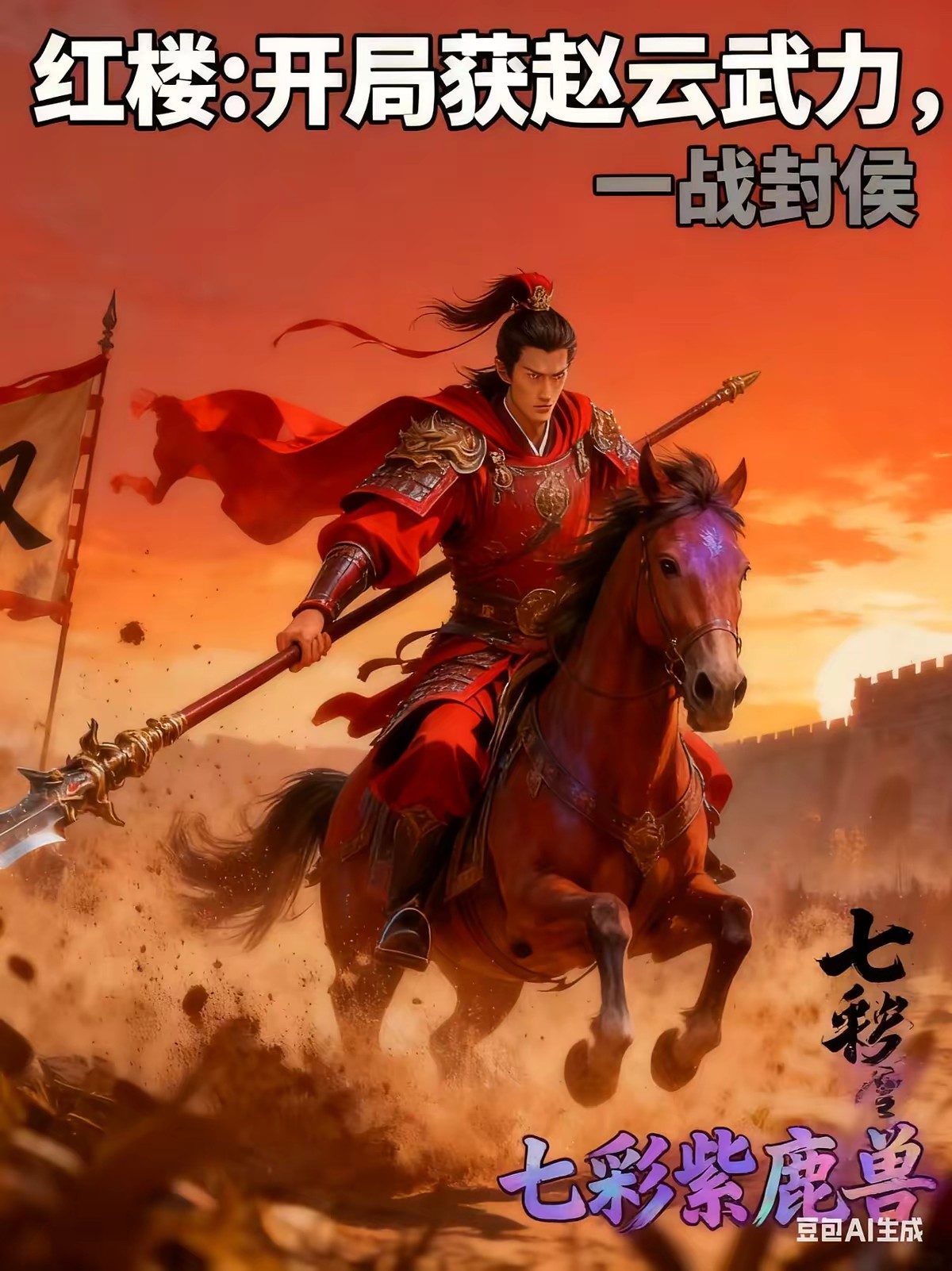
Chapter 225: The Champion Marquis Is Truly Too Powerful in Battle!
Aside from the Grand Scholars Chen Tingjing of Wenyuan Pavilion, Zhang Tingyu of Wenhua Hall, and Li Guangdi of Wuying Hall,
the other two newly appointed Grand Scholars are Fang Congzhe and Xiong Cili, both appearing to be in their fifties.
Fang Congzhe stands behind Zhang Tingyu; he is a leading figure of the Zhe faction.
With a pale face and long beard, he looks outwardly like a graceful scholar, but his expression now carries a hint of solemnity.
Xiong Cili stands behind Fang Congzhe; he is a leading figure of the Chu faction.
He appears a few years younger than Fang Congzhe, with a square face and eyes that look rather imposing.
The Prince of Nan'an Commandery and the Prince of Bejing stand on the other side among the military officials, each dressed in a princely python robe with a jade sash.
The Prince of Bejing has a clear, handsome visage, a slender figure, and an air of noble composure befitting a scion of a distinguished family.
The Prince of Nan'an Commandery is in his forties, his complexion dark, fine lines at the corners of his eyes, giving him a somewhat aged look, yet his face bears solemnity.
At this moment, although no one speaks, their expressions are somewhat obscure and uncertain.
Jing Sheng Di suddenly summons them to discuss affairs, combining the fresh victory report of the Northwest Champion Marquis Jia Zi Jie.
They need not think to know that this meeting must concern the awards for the northwest.
This matter has lingered unresolved for a long time; it seems a conclusion will be reached today!
Winning battles on the northwest front is a good thing, and granting rewards is appropriate; as high officials of the court, they should not behave as if facing a great enemy!
But the problem lies in the fact that Champion Marquis Jia Jing is simply too formidable!
Nine battles, nine victories; now he has sealed the wolf's lair, drinks horses in the vast sea, flattens the grasslands, his might shakes the world, and the realm is in turmoil.
The greatness of his martial prowess truly brings most of them to a point of unavoidable worry.
After a while.
As the sharp, lingering voice of the inner monitor from outside the hall sounded:
"His Majesty has arrived!"
Those present—Zhang Tingyu, Chen Tingjing, the Prince of Nan'an Commandery, and others—straightened their expressions, adjusted their attire, and paid their respects to Jing Sheng Di, who was seated on the dragon throne being supported by Xia Shouzhong.
"We have seen Your Majesty! Ten thousand years, ten thousand years, ten thousand ten thousand years!"
Today Jing Sheng Di wore ordinary attire, a stone‑blue robe, without a crown, his hair bound with a single white jade hairpin.
His complexion has improved considerably compared to a few months ago, his cheekbones appear fuller, and especially his eyes are extremely bright, bearing deeper authority.
"All ministers, no need for ceremony!"
Jing Sheng Di's expression was calm, his gaze swept over each person present, and his tone contained no trace of joy or anger.
After the eight were summoned, they formed two rows and stood.
Jing Sheng Di was the first to get straight to the point and asked Wang Ziteng:
"Lord Wang, how is the reorganization of Jingying progressing? I have recently received many memorials impeaching you."
Wang Ziteng's measures for reorganizing Jingying are almost entirely based on Jia Jing's approach to reforming Bashang Daying.
The first step is to cut off the old and weak, weed out the coarse, and examine the military registers for empty allowances and corruption.
Then select the elite, intensify training, and strictly enforce military discipline, among other measures.
Reorganizing the army generally follows these steps; the difficulty is not knowing the methods but implementing them in practice.
Because whether it is rectification or reform, it often means harming the interests of entrenched privileged groups, a redistribution of power and benefits.
Ensuring the appeasement of vested interests while properly advancing innovation and reform is the real challenge.
Most of the time the optimal choice is to enlarge the cake, using new benefit points to attract the old vested groups.
Jia Jing employed this method in reorganizing the three border towns of the northwest, using continuous victories to suppress the noise caused by the reforms of the frontier troops.
However, this method is difficult; those without long‑term vision and extraordinary means cannot accomplish it.
According to Jia Jing's original method of reforming Bashang Daying, he used forceful means to swiftly eliminate vested groups such as the Marquis of Linchuan and the Marquis of Zhongqin within Bashang Daying,
directly breaking the old power structure and redistributing Bashang Daying's interests.
This approach is the most thorough and effective method of rectification, yet also the most difficult.
Without crushing strength, one is easily subject to backlash.
Under the pressure of Jia Jing's frequent northwest victory reports and his own eagerness to achieve merit, Wang Ziteng unrealistically chose a sweeping, radical reform method.
Although in two months he audited thirty‑four to forty thousand empty allowances in Jingying and investigated five or six cases of corruption among mid‑level commanders.
He also enforced strict discipline, turning the old atmosphere of Jingying around considerably, but he completely offended the group of founding war heroes serving in Jingying.
These days the founding war heroes have not ceased fabricating accusations, filing petitions accusing him of 'disrupting military morale,' 'mistreating soldiers,' and 'undermining morale,' among other crimes.
More seriously,
many founding war heroes secretly stir public opinion, incite ordinary soldiers of Jingying to discontent, and have caused several incidents of mutiny and unrest in Shenjing City.
Moreover, Wang Ziteng's lack of prestige leaves him with few allies in the army, leading to deception, false flattery, and covert opposition.
Even under the scheming of certain individuals, many wrongful and fabricated incidents have been orchestrated.
Thus, the recent reorganization of Jingying has made Shenjing City unsettled from top to bottom.
Although his intention to reform Jingying is good, the chaos he has caused is indeed considerable.
Jing Sheng Di affirmed his approach, did not remove his post nor punish him, and his support for his troops' pay and other matters has not diminished at all.
However, Jing Sheng Di also expressed doubts about his capability, fearing that his pursuit of quick results may generate even greater chaos.
Facing Jing Sheng Di's questioning, Wang Ziteng did not panic, bowed and stepped forward, and said in a deep voice:
"Your Majesty, I have been reorganizing Jingying for over two months and have seen considerable results."
"I have implemented four measures in Jingying: first, inventory the troops, recording real names in the register."
"Thoroughly investigate the phenomenon of 'empty name allowances,' match names to persons, eradicate fraudulent pay, uncovering over 34,700 empty allowances."
"Second, cut redundant personnel and refine the soldiers. Eliminate idle townsfolk, privileged servants, and others who have infiltrated the army."
"Only retain battle‑worthy troops, rigorously train marching, formations, and firearm drills; now Jingying's hundred‑thousand soldiers practice twice daily and have become quite combat‑effective."
Third: forbid conscripting for labor and return warhorses.
Strictly forbid soldiers from being sent to repair houses or serve as labor; reclaim warhorses that have been rented out or privately seized, to ensure the court's military supplies do not leak out.
Fourth: rectify military discipline and severely punish embezzlement. Heavily punish officers who embezzle military pay, execute typical cases to set an example, and restore the army's basic order and morale.
Additionally, I used the Champion Marquis's military song "Red‑Daring Loyal Soul" as the unified chant for Jingying's drills and pay‑receiving, to cultivate the soldiers' loyalty to the sovereign and love of the country.
I believe that the reorganization of Jingying is now on the right track; in another two or three months, the hundred‑thousand‑strong army will be completely renewed.
Wang Ziteng's report of this passage was very smooth, clearly having rehearsed it many times in private.
They did not explain the impeachment, but instead specifically detailed the concrete deeds they had accomplished during this period.
They knew in their heart that some matters needed no further explanation.
Everyone present understood that reorganizing Jingying was a task that offended people; it would be strange if no one impeached them.
These impeachments were not their fault at all; rather, they were a glorious testament to their conscientious, impartial conduct.
Recall that when Jia Jing restructured Bashang Daying, Jingnan Wuxun even forced a palace audience!
My own few impeachments, compared to his, amount to nothing.
As long as no major chaos erupts, these impeachments will ultimately serve as stepping stones for their ascent to Minister of War.
End of Chapter