Chapter 29: The Night of the Shovels
The sunset of June 13, 1830, was a flat, crimson ribbon that ran along the
western horizon, turning the calm waters of the Mediterranean into a vast, dark
plate of copper.
On the high stone gallery of the old Ottoman fort at the tip of the Sidi Fredj
peninsula, Meziane sat behind his achromatic telescope. The brass barrel of the
instrument was cool under his fingers, and the lens was focused on the empty
blue of the northern horizon.
He had been at the watch since the dawn. His eyes were burning from the glare of
the water, and his throat was dry with the salty dust of the sea-wind.
He leaned forward, his hand adjusting the fine screw of the eyepiece.
Through the magnified glass, the empty horizon was no longer empty. A tiny,
white speck had appeared on the blue line where the water met the sky—a single,
ghostly triangle of sail.
Meziane's heart gave a sudden, violent thud against his ribs.
He watched. Within ten minutes, the single sail was joined by a second, then a
third, and then... a forest of white masts began to rise over the curve of the
earth. It was not a group of ships; it was a floating city of wood, canvas, and
iron, extending as far as his lens could reach to the east and the west.
The French armada had arrived.
Meziane did not panic. He stood up, walked to the small wooden table inside the
fort's stone watch-room, and sat before the brass key of his telegraph.
His hand was steady as he pressed the lever.
Click... clank... click.
Three miles away, inside the damp, cool vault of the Roman tomb in the Staoueli
forest, the copper needle of Amine's receiver swung to the left.
Clink... clink... clank.
Yusuf, who was sitting by the slate table with a lantern, stood up instantly. He
read the clicks, his finger running down the page of his codebook.
"Sidi," Yusuf said, his voice dropping to a low, solemn whisper that cut through
the quiet of the tomb. "The signal has come. The needle is speaking. Page
twelve, line four: The fleet is sighted. One hundred sails. Heading for the
bay."
Amine stood up from his drafting table. He did not look at the maps; he looked
at his water-clock. It was exactly eight o'clock in the evening.
"The sun has set," Amine said, his voice flat, steady, and carrying the absolute
authority of a commander who had calculated this hour for three years. "The
mists are rising from the marshes. Yusuf, sound the silent alarm. It is time to
deploy."
The descent onto the beach of Sidi Fredj was a silent, ghostly march.
Under the cover of a moonless night and a thick, wet sea-fog that rolled in from
the Mediterranean, the three hundred and fifty Zouaoua and fifty Khayala riders
moved out of the Staoueli forest. They did not carry torches. Each man knew his
place in the line, having practiced the deployment in the dark of the barracks
through the winter.
The thirty freight wagons, their wooden wheels wrapped in thick layers of straw
and oiled leather, rolled silently over the macadam road, carrying the three
thousand collapsible wooden gabions and the ten thousand canvas sandbags.
By nine o'clock, the column had reached the narrow neck of the peninsula.
The neck was a low, sandy spit of land, barely three hundred meters wide, that
connected the rocky tip of the peninsula to the mainland. It was the perfect
tactical bottleneck. By blocking this narrow strip of sand, Amine could pin the
thirty-seven thousand French soldiers onto the narrow tip of the peninsula,
preventing them from deploying their superior numbers into the broad, open
plains of Staoueli.
"Unload the wagons!" Yusuf's voice whispered through the dark, muffled by the
roar of the surf.
The work began.
There was no shouting, and no sound of iron on stone. The Zouaoua recruits,
working in their four-man Rabaa squads, carried the flat, folded wooden gabions
onto the sand.
With a soft, wooden click, the frames were unfolded, turning into large,
cylindrical baskets of tough willow laths, one and a half meters high. They were
placed in a continuous, interlocking line across the entire three-hundred-meter
width of the neck.
"Dig!" Lounes whispered, his own large shovel already deep in the wet sand.
The physical labor was immense. The sand of the beach was dry and soft on the
surface, but a foot down, it was wet, heavy, and packed tight by the tide.
Shove-shwack. Shove-shwack.
Three hundred steel shovels worked in a continuous, rhythmic cadence. The men
did not tire; they had been fed their rich, preserved mutton broth and beans
before the march, and their muscles were strong from months of physical drill.
As the sand was shoveled into the wooden gabions, the empty willow frames turned
into solid, bulletproof, stone-hard bastions. Behind the first line of gabions,
a second crew of workers piled the excess sand, creating a sloping, continuous
breastwork of dry sand, five meters thick at the base and two meters high.
At three points along the line, they built the artillery redoubts.
The six gold-bronze Zilzal cannons were rolled into their positions, their heavy
oak carriages locked into flat wooden platforms they had laid on the sand. The
muzzle of each gun was positioned behind a narrow, sand-walled embrasure, which
was immediately masked with dry seaweed and scrub to blend perfectly with the
natural contour of the dunes.
By three o'clock in the morning, the work was complete.
A continuous, three-hundred-meter wall of sand and wood blocked the neck of the
peninsula. It looked like nothing but a natural ridge of dunes, its surface
rough, uneven, and covered in wild sea-grass. Even from a distance of fifty
paces, the defensive line was completely invisible in the gray morning mist.
Behind the wall, the three hundred Zouaoua lay flat in their sandy trenches,
their Sabaa rifles loaded with the silent, smokeless guncotton cartridges, their
cartridge boxes open beside them.
The six Zilzal cannons were ready, their crews standing silent by the breeches,
the silk powder bags and the heavy zinc-studded shells laid out on wooden trays
behind the redoubts.
Amine stood behind the center redoubt, his pocket telescope focused on the bay.
The first gray light of dawn—the dawn of June 14, 1830—was beginning to leak
into the eastern sky, turning the dark water of the bay into a cold, steel-gray
mirror.
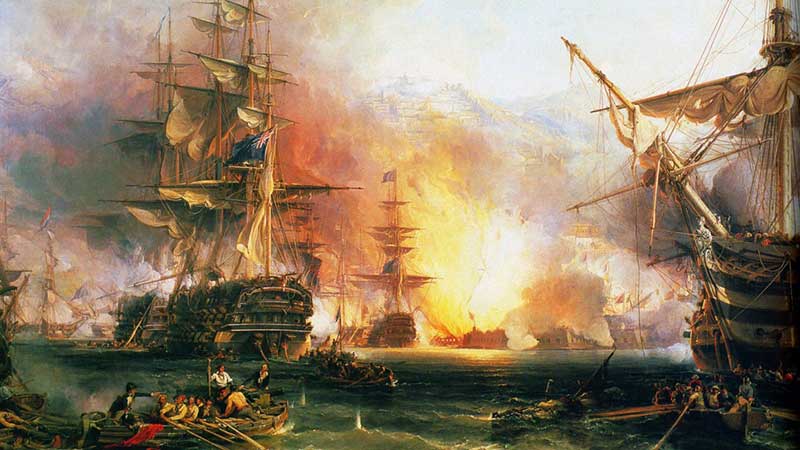
Through the thinning mist, the French armada was revealed.
It was an awesome, terrifying sight. Less than two miles from the shore, the one
hundred and three warships and three hundred and fifty transport ships sat on
the water like a forest of black wood and white canvas. The sound of their
anchor chains running out through the iron hawse-holes—a deep, metallic
clank-clank-clank—carried clearly over the water in the quiet of the morning.
On the decks of the transports, the French soldiers—thirty-seven thousand men in
their bright blue coats, white trousers, and tall leather shakos—were already
gathering, their bayonets glittering in the pale light.
"They are lowering the flat-boats, Sidi," Yusuf whispered, his hand on the
telescope mount.
Through the glass, Amine watched the heavy wooden landing boats being lowered
from the sides of the transports. Each boat was packed with fifty soldiers,
their muskets held between their knees, their faces silent and pale as the
oarsmen took their places.
The first wave of the invasion—the elite division under General de
Martignac—consisted of eighty boats, carrying four thousand men. They were
heading directly for the empty, sandy beach of the peninsula.
Amine reached down, his fingers closing around the brass key of his field
telegraph.
He tapped the key, sending a single, short signal along the buried copper wire
to Meziane at the fort's lookout post.
Click.
The signal was received. The communication was open.
Amine looked back at the long line of his Zouaoua, their faces calm, their eyes
fixed on the approaching boats, their fingers light on the triggers of their
rifles. There was no fear in them; they had been trained for this hour, and they
knew that the sand beneath their chests was their shield.
The French flat-boats were within one thousand yards. The oarsmen were rowing
with a steady, rhythmic splash, the water white around the wooden bows.
Amine raised his hand.
"Wait for the first boat to touch the sand," Amine said, his voice quiet, flat,
and carrying the absolute certainty of the physical laws. "And then... we will
fire."
End of Chapter