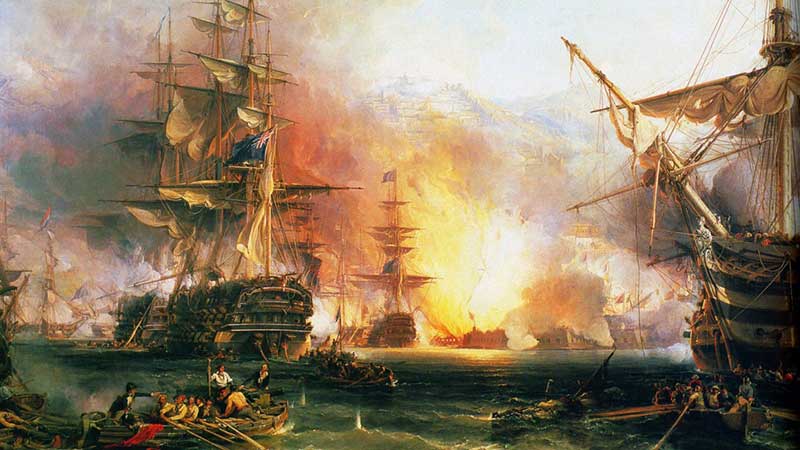
Chapter 1: The Splintered Crescent
The transition did not announce itself with the clarity of a bell. It came as a
suffocating weight, like being buried beneath wet, heavy sand, followed by the
violent, icy rush of air into lungs that felt too small.
He gasped, a wet, rattling sound that caught in his throat.
"Sidi? Sidi Amine, in the name of Allah, breathe."
The voice was thin and dry, vibrating with a quiet, terrified urgency.
Amine—or the soul that had suddenly been poured into Amine's flesh—opened his
eyes. His vision was a chaotic smear of amber light and shifting, cavernous
shadows. The smell hit him first, thick and overwhelming: the sweet, cloying
scent of burning ambergris, the musty damp of ancient plaster, and the sharp,
medicinal tang of vinegar used to cool a fever.
He was lying on a low divan, his head propped up by stiff, silk-covered bolsters
that smelled of rosewater and old sweat. Above him, the ceiling was a complex,
interlocking maze of carved cedarwood, its deep geometry painted in faded indigo
and gold. It was beautiful, but to his eyes, it was something more.
Suddenly, a strange sensation washed over his mind. It was as if a massive,
silent engine had hummed to life in the back of his skull. The geometric
patterns on the ceiling did not merely look pretty; they resolved into precise
mathematical equations. His mind calculated the angles of the cedar joints, the
structural load of the beams, the grain density of the wood—all of it happening
in a fraction of a second, without his conscious effort.
He closed his eyes, groaning as a wave of double-memories collided.
In one life, he was a thirty-four-year-old metallurgical engineer from the
rugged highlands of Bouira. He remembered the cold smell of the steel mill in El
Hadjar, the deafening roar of the electric arc furnaces, the taste of cheap
espresso in dusty paper cups, and the quiet pride of calculating the perfect
carbon-to-manganese ratio for high-tensile rebar. He knew the structural
properties of every alloy, the chemical synthesis of synthetic polymers, the
mathematics of thermodynamics, and the brutal history of his country.
In this life, he was Amine ibn Hussein. Nineteen years old. The second son of
Hussein Pasha, the Dey of Algiers. He was a youth known for his quiet temper,
his preference for the company of foreign books over the barracks of the
Janissaries, and his fragile health.
The two identities did not fight; they fused, like two pieces of white-hot steel
hammered together on an anvil. The resulting intellect was terrifyingly sharp.
His modern scientific training was now backed by a brain that possessed perfect,
near-photographic recall and an extraordinary capacity for spatial
visualization. He could see a chemical formula not as letters on a page, but as
three-dimensional molecular bonds vibrating in real-time.
"Sidi Amine..."
Amine turned his head. The man kneeling beside the divan was old, his face
mapped with deep, dark wrinkles that collected the dim candle-light. He wore a
dark wool burnous over a faded green waistcoat. This was Yahia, a loyal family
retainer, a Kouloughli—a man of mixed Turkish and Algerian blood—who had watched
over Amine since his mother had passed.
"I am... awake, Yahia," Amine said. His voice was deeper than he expected, raspy
from the fever, speaking in a fluid blend of Algerian Darja and Ottoman Turkish.
He sat up, the heavy silk sheets sliding down his chest.
He looked at his hands. They were pale, thin, and unmarked by the scars of
industrial labor that had defined his previous life. But they were steady.
"The fever has broken," Yahia whispered, his hands trembling as he offered a
small brass cup of cool water. "Praise be to God. For three days, you muttered
of iron mountains and fire-carriages. We feared the black cough had taken you."
Amine drank. The water was cool but tasted slightly flat, carrying the faint,
mineral taste of the Casbah's cisterns. He wiped his mouth with the back of his
hand, his mind immediately cataloging the date and the political climate.
"The date, Yahia," Amine said, his voice dropping to a firm, quiet tone that
made the old servant blink in surprise. "What is the day?"
"It is... the twenty-eighth day of Rabi' al-Thani, Sidi. In the year 1243."
Amine's mind instantly translated the Islamic lunar date to the Gregorian
calendar. Late October, 1827.
"And the fleet?" Amine asked, his heart tightening. "What news from the northern
waters? From Greece?"
Yahia's face fell, the wrinkles around his mouth deepening into hard, tragic
lines. He looked away, his gaze falling to the tiled floor. "A courier boat from
the east slipped past the French frigates last night. They brought word from the
Peloponnese. The fleet... our beautiful frigates, the ships of the Sultan, the
forces of Ibrahim Pasha... they are no more."
The old man's voice cracked. "The English, the French, the Russians... they
trapped them in the bay of Navarino. They say the sea ran black with gunpowder
and red with the blood of our sailors. We have lost everything, Sidi. The Miftah
al-Jihad, the Ghazala... all sunk or burned to the waterline."
Amine leaned back against the bolsters, his eyes staring into the dark corners
of the room.
Navarino. The historical pivot point. On October 20, 1827, the combined
Ottoman-Egyptian-Algerian fleet had been annihilated by the European powers. For
Algiers, this was the death blow to its maritime power. The Regency had been
under a French naval blockade since June, following the famous "Fan Affair" in
April, when his father, Hussein Dey, had struck the French consul Pierre Deval
with a fly-whisk during an argument over unpaid debts.
Now, with the fleet destroyed, Algiers was completely isolated. The French
blockade would become a stranglehold. And in less than three years—in June
of 1830—a French armada carrying thirty-seven thousand men would land at Sidi
Fredj, exploit the Regency's obsolete defenses, and end three centuries of
Ottoman-Algerian rule, beginning more than a century of brutal colonization.
Amine closed his eyes. He saw the timeline clearly. He had exactly thirty-two
months.
Thirty-two months to build an industrial foundation in a country that had no
railroads, no coal mines, no steam engines, no chemical factories, and no modern
military organization. A country governed by a decaying caste of Ottoman
Janissaries who viewed any military innovation with suspicion and a sovereign
who was too proud to see the precipice he was standing on.
"Sidi?" Yahia asked, watching him with growing concern. "You look... different.
Your eyes."
"I am well, Yahia," Amine said, swinging his legs over the edge of the divan.
The cool marble floor beneath his bare feet was grounding. "In fact, I have
never been more awake. Help me dress. I must see my father."
"But the Diwan is in session," Yahia warned, his voice dropping to a hushed
whisper. "The Janissary Aga, Ibrahim Pasha, the Rais... they are all there. The
air is thick with anger. It is not a place for... for quiet reflection."
"I am done with quiet reflection," Amine said, standing up. He felt a brief
flicker of vertigo, but his mind quickly balanced his physical center. "Prepare
my formal kaftan. The dark blue wool one with the silver thread. And fetch my
yatagan."
The Citadel of Algiers—the Dar al-Sultan—sat at the highest point of the Casbah,
a fortress within a fortress, looking down upon the white-walled city and the
sparkling blue of the Mediterranean. But today, the beauty of the view was
marred by the gray silhouettes of three French frigates cruising lazily just
beyond the range of the harbor's heavy bronze cannons.
Amine walked through the vaulted corridors of the palace, his boots clicking
firmly on the glazed ceramic tiles. Yahia followed half a step behind, his eyes
darting nervously to the armed Janissaries who stood guard at every archway.
These guards—the Yoldach—were imposing men, dressed in voluminous trousers,
embroidered vests, and high felt caps. They carried long-barreled flintlock
muskets and heavy silver-mounted daggers. To the untrained eye, they looked like
the terror of Europe. To Amine, they looked like living museum exhibits. Their
weapons were heavy, slow to load, and useless in wet weather. Their tactics were
frozen in the seventeenth century.
As Amine approached the grand wooden doors of the Diwan, the heavy scent of
Turkish tobacco and roasted coffee drifted out, mixed with the sharp, acidic
smell of sweat and fear.
The two guards at the door crossed their long halberds, blocking his path.
"The Dey is in closed council, Sidi Amine," one of them said, his tone polite
but firm. He was a veteran with a thick gray mustache, his face scarred by old
skirmishes with the Spanish. "Only the commanders of the army and the members of
the Diwan may enter."
Amine did not hesitate. He stepped closer, his gaze locking onto the guard's
eyes. The sheer, icy intensity of his look made the older man's grip on his
halberd falter.
"I am the son of the sovereign," Amine said, his voice low, steady, and carrying
an strange, magnetic resonance that left no room for argument. "And the news
from Navarino concerns the survival of this state. Step aside."
The guards exchanged a brief, uncertain glance. Slowly, they raised their
weapons. Amine pushed open the heavy cedar doors and stepped into the
smoke-filled hall.
The Diwan was in chaos.
More than thirty men were gathered in the long, high-ceilinged room. Along the
walls, seated on low benches covered in red velvet, were the senior officers of
the Janissary corps, their faces dark with fury. In the center of the room stood
several rais—the corsair captains—their silks stained with sea salt, gesturing
wildly as they argued.
At the far end of the hall, raised on a low marble platform, sat Hussein Dey.
His father looked older than his sixty years. His long beard, once pure white,
was yellowed with tobacco smoke. His eyes were deeply bloodshot, sunk into dark
hollows of exhaustion. He held a long cherrywood pipe, but he had forgotten to
light it.
To his right stood Ibrahim Pasha, the Dey's son-in-law and the Aga of the
Janissaries—a large, arrogant man with a chest heavy with gold embroidery.
"... we must launch every row-galley we have!" one of the corsair captains, a man
named Rais Hamidou the Younger, was shouting. "We must attack the French
frigates at night, when the wind is low and their great sails are useless! We
can board them and take their guns!"
"And how will you reach them, Rais?" Ibrahim Pasha sneered, his hand resting on
the gem-encrusted hilt of his sword. "The French have thirty-six-pounders on
their lower decks. They will blow your rowboats out of the water before your men
can even smell their tar. We must strengthen the city walls. If the French land,
they must face our stone batteries."
"The stone batteries face the sea!" another voice barked. "What if they land
down the coast? What if they march from the west?"
"Silence! All of you!" Hussein Dey's voice was loud, but it lacked the iron
authority it had possessed a year ago. He slammed his pipe down on the brass
tray beside him. "We are the defenders of Islam. The Sultan in Constantinople
has assured us that the British and French will face his wrath. We must hold the
city and wait for the winter storms to scatter their blockade."
Amine stepped forward, his boots sounding loud against the sudden quiet that
fell over the room as the council noticed his presence.
"The Sultan will send nothing but empty parchment, Father," Amine said.
The silence in the room became absolute. Every eye turned to the young prince.
Hussein Dey frowned, his brow furrowing in a mix of surprise and irritation.
"Amine? You should be in your chambers. The physicians said your fever—"
"My fever has passed, Father. And in its place, I have found clarity," Amine
said, walking down the center of the hall. He stopped ten paces from the dais,
standing straight, his hands clasped loosely behind his back. "The Sultan cannot
save us. His own empire is bleeding to death. He destroyed his own Janissaries
last year in Constantinople. He has no army to spare, and his navy lies at the
bottom of the bay of Navarino alongside our own."
"Mind your tongue, boy!" Ibrahim Pasha stepped down from the dais, his face
flushing dark with anger. "You speak like a coward. We have fifty thousand brave
soldiers under our command. If the French dare to step onto our soil, we will
feed their flesh to the dogs of the Mitidja!"
Amine looked at Ibrahim Pasha. To his newly enhanced mind, Ibrahim's tactical
understanding was like a child's drawing compared to a high-resolution map.
"Bravery does not stop grapeshot, Ibrahim Pasha," Amine said, his tone cool,
almost academic, which only served to make the commander angrier. "The French
army is not the mob of Spanish conscripts we defeated fifty years ago. They are
veterans of the Napoleonic wars. They have light, mobile artillery that can be
assembled on a beach in minutes. They have percussion ignition systems that do
not misfire in the damp air of our coast. And they have a plan."
Hussein Dey leaned forward, his interest piqued despite himself. "A plan? What
plan do you speak of, my son?"
"The French will not attack the harbor of Algiers," Amine said, gesturing toward
the sea windows. "They know our batteries are formidable from the water.
Instead, they will land thirty kilometers to the west, at the bay of Sidi Fredj.
The bay is broad, sheltered from the northern winds, and has a sandy beach
perfect for landing flat-bottomed boats. They will land thirty thousand men
there, establish a fortified camp, and march overland to attack the Emperor's
Castle from the rear."
A murmur of uneasy laughter ran through some of the Janissary officers, but it
was forced. The detail with which the prince spoke was too precise to be easily
dismissed.
"Sidi Fredj?" Ibrahim Pasha laughed, though his eyes remained wary. "That is a
desolate beach. Even if they land there, they must cross the hills of El Biar.
Our cavalry would cut them to pieces in the ravines."
"Your cavalry will be decimated by their infantry squares," Amine replied
instantly, his mind projecting the ballistic trajectories of 19th-century
musketry. "A disciplined infantry square can fire three volleys a minute. Your
horses will not even reach their bayonets. And once they take the Emperor's
Castle, their artillery will look down upon this very palace. They will destroy
the Casbah without ever having to sail a single ship into the harbor."
Hussein Dey's face went pale. The projection was logical—brutally so. He looked
at his son as if seeing him for the first time. The quiet, sickly boy who spent
his days reading French and English philosophy books was gone. In his place
stood a young man whose words carried the heavy weight of absolute certainty.
"If you are so wise, Amine," the Dey said, his voice quiet, "what is your
counsel? Do we surrender to the French king? Do we beg for terms?"
"Never," Amine said, his eyes flashing with a sudden, dark fire. The modern
Algerian in him, the soul that remembered the century of pain, land-theft, and
cultural erasure that his people had suffered under French rule, rose to the
surface. "We do not surrender. We destroy them. But we cannot do it with the
tools of the past."
He stepped closer to the dais, looking up at his father. "The French will not
invade tomorrow. Their treasury is depleted, and their king, Charles X, must
build his political support before he can launch such an expedition. We have
three years. Three winters where the seas are too rough for their transports."
"And what can we do in three years?" Ibrahim Pasha muttered. "We cannot buy new
ships. The blockade has dried up our customs revenue."
"We do not buy them," Amine said, turning to Ibrahim. "We build our own
strength. But we cannot do it here in Algiers. The city is too close to the sea,
too vulnerable to the French ships, and too full of... distractions."
He turned back to his father. "Father. Grant me the governorship of the Beylik
of Titteri's eastern borders—the valley of Hamza, the lands around the old fort
of Bouira, and the southern slopes of the Djurdjura."
Hussein Dey stared at him, astonished. "Hamza? That is a wild land, Amine. The
Kabyle tribes there do not recognize our authority. They pay no taxes, and they
have killed three of our tax-collectors in the last year. The land is nothing
but stone, dry scrub, and rebellious mountaineers. Why would you want to go
there?"
"Because beneath those stones lies iron," Amine said, his mind mapping the rich
hematite veins of the Djurdjura and the coal deposits further inland. "And in
those mountains are forests of oak for charcoal, and rivers that never dry up,
even in summer. I do not ask for your gold, Father. I know the treasury is
empty. I ask only for the title of Bey of the Interior, the authority to raise a
local militia from the tribes, and the right to keep whatever revenue I can
extract from the land."
The Janissaries in the room began to whisper. To them, this seemed like a
blessing. The troublesome, overly intellectual prince was asking to exile
himself to one of the most dangerous, unprofitable regions of the Regency. If
the Kabyles killed him, it was no loss to them. If he stayed there, he would be
out of the way when the French eventually arrived.
Ibrahim Pasha smiled, a cold, satisfied expression. "I say we grant his request,
Highness. If the prince wishes to tame the mountain bandits of the Djurdjura,
let him try. Perhaps it will teach him that war is not learned from European
books."
Hussein Dey did not answer immediately. He looked at his son, searching his face
for any sign of hesitation. He found none. There was only a cold, metallurgical
hardness in Amine's eyes.
"You are my son, Amine," the Dey said slowly. "If I send you to Hamza with no
army, I may be sending you to your grave."
"If I stay here, Father, we are all going to our graves," Amine replied.
The Dey closed his eyes for a long moment, then opened them, his hand rising in
a slow, heavy gesture of assent.
"So be it," Hussein Dey declared. "You are appointed Bey of the Interior. The
fort of Hamza is your seat. May Allah protect you, for I cannot."
The preparations for the journey were meager. Because the treasury was depleted
and the Janissary corps was unwilling to spare a single soldier, Amine was given
only twenty horsemen—Kouloughlis of low rank who were viewed as politically
unreliable or troublesome by Ibrahim Pasha.
But Amine did not mind. He did not want Janissaries. They were too set in their
ways, too loyal to their old privileges, and too proud to learn the new ways of
war he intended to introduce.
On the morning of his departure, the sun rose over the bay of Algiers like a
flat copper plate. Amine stood on the high terrace of his private quarters,
watching the light catch the sails of the French blockade ships.
"Sidi Amine."
He turned to see a young man, perhaps two years older than himself, standing in
the doorway. He was dressed in the simple, rugged clothes of a Kabyle
mountaineer—a heavy wool qashabiya and a simple white turban. His face was
weathered by the sun, and his eyes were dark and watchful. This was Meziane, a
native of the Ait Irathen tribe of the Djurdjura, who had come to Algiers as a
laborer and had ended up working in the palace stables.
"You are leaving for my country, Sidi," Meziane said, his Arabic carrying the
thick, guttural accent of the Tamazight speakers of the mountains.
"I am," Amine said. "And I need men who know those mountains. Men who know where
the iron stones lie in the riverbeds, and where the water runs fastest."
Meziane looked at him with a mixture of curiosity and suspicion. "The Turkish
rulers usually come to our mountains only to burn our crops and demand our
silver. Why should we help you?"Amine
End of Chapter