Chapter 312
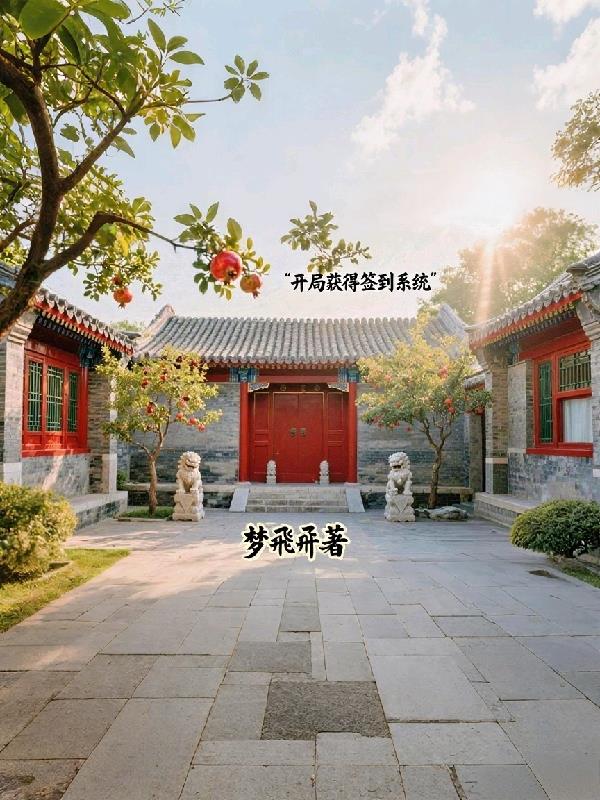
Zhao Jianguo sat at the wooden desk in the Siheyuan underground archive, the old-fashioned hanging light above his head flickered twice, he tapped the lamp holder casually, and the light steadied. The room had no heating on; a few stacks of old newspapers piled in the corner, and faintly one could still smell the coal stove. He rubbed his hands, staring at the semi-transparent panel called up from the system before him, on which scrolled a line of text: "Check-in Successful, unlock new energy patent Permission ×3."
He was about to jot it down when the old wall clock "click" sounded, its hands pointing exactly to 1 a. m. This place was originally the Siheyuan rear wing rooms converted into a storage room; later he tidied it up to use as a secret base. On the desk sat a modified radio, actually a quantum signal receiver, faintly glowing blue.
Just then, the air on the opposite wall suddenly rippled, like a stone tossed onto water. A figure in gray work clothes slowly materialized, standing in the center of the room—it was Chen Jianguo's Projection. He held a stack of electronic folders, his complexion not looking good.
"Here's the report." Chen Jianguo slapped the folder onto the desk, the cover bearing the five large characters "2040 Energy Report": "Global traditional energy reserves will be depleted within ten years. Oil, coal, natural gas—none will be enough."
Zhao Jianguo pulled out a page and glanced at it, his brows furrowing: "Are they still burning coal for power outside?"
"That's right." Chen Jianguo sighed, "Ordinary folks rely on honeycomb coal for cooking at home, factory smokestacks belch black smoke all day. As for renewable energy, hardly any projects have been approved."
Zhao Jianguo closed the folder and tapped his fingers twice on the desk. He knew this couldn't be delayed. The three patents from the check-in system—solar fusion conversion, geothermal gradient utilization, biomass gasification—were all technologies that could hold up. But the most urgent thing now was to lock down the intellectual property rights.
He pulled out the old brick phone he carried—already modified into an encrypted communications Terminal—and dialed a secure line. "File three applications in parallel, prioritize domestic, simultaneously submit registration in Southeast Asia and Africa." He paused after speaking, then added, "Don't wait for the approval process; use the emergency channel."
The other end acknowledged and hung up. Zhao Jianguo looked up at Chen Jianguo: "How long can you hold out there?"
"The Projection can last at most seven minutes." Chen Jianguo glanced at the virtual timer on his wrist, "The energy crisis is just the beginning; next will come food, water resources, climate migration… but what you can do now is to buy time and set things up."
As his words fell, his figure flickered, shaking like a poor TV signal. Zhao Jianguo didn't move, continuing to flip through the report. By the time he looked up again, the person was gone, leaving only a faint trace of static in the air.
At the first light of dawn, Zhao Jianguo arrived at the Siheyuan meeting hall. This room had originally been an ancestral hall, later converted into a place for collective meetings; the long wooden tables were polished to a shine, and eight chairs were neatly arranged. Dong Xu arrived earliest, wearing a washed‑white Zhongshan suit and carrying a canvas bag.
"I heard you're working on new energy?" Dong Xu asked as he sat down.
Zhao Jianguo poured a cup of hot water and handed it over: "It's not just about doing it; it's about changing lanes to overtake."
Dong Xu took a sip of tea, his eyes lighting up: "I have an idea—our country's hybrid rice yields are high, and after each harvest we have tons of straw that gets burned uselessly, polluting the air. Why not collect it and use it to generate electricity?"
Zhao Jianguo froze for a moment.
Before he could speak, a short prompt tone sounded in his ear—the system popped up a red line: "This proposal may provoke food-related controversy."
He stared at those characters for three seconds, then asked: "What's the source of the controversy?"
The system didn't reply, only displaying: "Insufficient data; recommend running a simulation."
Seeing Zhao Jianguo silent, Dong Xu assumed it was a technical issue: "Are you worried about conversion efficiency? Actually we could build small gasification stations near the production areas, avoiding long‑distance transport and keeping costs down."
Zhao Jianguo shook his head: "I'm not afraid the technology won't work; I'm afraid people's hearts will go astray." He paused, then continued: "If someone thinks we're burning food crops for fuel—even just as a by‑product—there will be gossip. Worse still, later someone might invoke 'energy demand' as a banner to force farmers to plant more and leave less, affecting the grain supply."
Dong Xu understood, his face also sinking: "That really could happen."
"Let's not decide yet." Zhao Jianguo took out his notebook and wrote: "Have the tech team run a calculation model: assume thirty percent of the nation's straw is recovered for power generation, then see if it affects grain prices, farmers' income, or soil fertility. Especially soil fertility—if we burn too much this year, the land may not grow crops next year."
Dong Xu nodded: "That can be done. I'll find the production team later to coordinate."
The two were still talking when the sound of sweeping the courtyard came from outside—it was the elderly lady from next door starting her chores. Sunlight streamed through the window crack, cutting a diagonal band across the floor. Zhao Jianguo closed his notebook, got up, and headed for the Control Room.
It was just past nine in the morning when he entered the Siheyuan Central Control Room. This place had originally been the power distribution room, now remodeled by him into a small data center. A few servers hummed, and on the wall hung a main screen displaying the patent application progress bar.
He walked up to the Operation Console and input the command: "Establish a special research direction for 'non‑food biomass energy.'" Then he typed a few keywords into the search box: "stress‑tolerant, high fiber, low water consumption."
The screen immediately popped up a list of candidate plants: mang grass, reed bamboo, giant king grass, microalgae… Each entry was followed by its growth cycle, unit heat value, and environmental adaptability score.
Zhao Jianguo studied it for a moment, then clicked on the giant king grass information page. This grass can be cut five to six times a year, yielding per mu more than twice that of ordinary corn stalks, and it doesn't occupy farmland—it can be grown on barren slopes and saline‑alkali land.
"This should be a priority push." He told the recorder, "Notify the agricultural team to prepare to launch the cultivation experiment, prioritizing drought resistance and fiber conversion rate testing."
The recorder quickly noted it down and turned to relay the message. Zhao Jianguo stood by the screen, unmoving, watching the continuously refreshing data stream.
Outside the window, children in the Courtyard were jumping rope, their laughter coming in waves. A little girl fell, got up, patted her pants, and bounced back up, still humming a tune.
Zhao Jianguo glanced at the clock—10:17 a. m. He picked up the enamel mug on the desk and took a sip of cool tea; tea leaves lodged in the gap between his teeth, which he nudged with his tongue, not bothering to dislodge them right away.
At that moment, the system popped up a small notice: "【The 'drought‑resistant crop cultivation' module is ready, awaiting handover to the project team】."
He reached out and tapped to confirm.
A slit opened in the Control Room door, and a staff member peered in, saying, "Director Dong says there will be a coordination meeting this afternoon to discuss the straw pilot project."
Zhao Jianguo grunted in acknowledgment: "Have him bring the preliminary model."
The person nodded and left. The room fell quiet, save for the hum of the server fans. Zhao Jianguo leaned back in his chair and stared at the ceiling for a while.
There was a crack there; rain had leaked through it once last year, the repair was done but the scar remained.
He recalled the chart from last night's report—the red line soaring upward, representing energy consumption; the green line flat, barely moving, that was the renewable‑energy share. The gap between the two numbers was deeper than a mountain.
But he couldn't afford to sigh right now. What could be done was to fill it in step by step.
He sat up straight again, opened the internal communications channel: "Notify all relevant personnel to summarize the new‑energy patent application status once a day, and report any problems immediately."
After speaking, he paused, then added: "Also, look up the penalty records for straw burning in various localities over the past three months—I need to know where enforcement is lax and where the ban is actually being carried out."
A response came back over the channel. Zhao Jianguo switched off the microphone, lowered his head to tidy his cuffs. There was a speck of chalk dust on them, picked up during this morning's meeting.
Sunlight crept to the edge of the Operation Console, falling on a stack of documents at his right hand. The top sheet bore the four characters in bold: **Biomass Energy Feasibility Analysis (Draft)**.
He reached out and pressed the stack down, so the wind wouldn't lift it.
End of Chapter