Chapter 313: Breakthrough in Drought‑Resistant Crop Cultivation and Ecological Restoration
Zhao Chen pushed open the Iron Gate of the B‑Zone No. 3 greenhouse at the experimental base, and his elbow accidentally knocked the old hygrometer against the wall. The needle wavered twice and settled at "45%". He glanced down at the mud on his shoe soles, shuffled his foot on the threshold, and muttered, "Why is this soil getting more and more sticky each time it's turned."
The interior was more stuffy than outside, and the overhead fluorescent tubes buzzed, casting a white glare on the enamel cup on the Operation Console. He walked over, twisted the Recorder's switch, and the Screen lit up, displaying a prompt: "Biological module pending activation, current resource usage 87%."
He frowned, tapped the keyboard a few times, and pulled up the system log. Sure enough, the "New Energy Layout" data was still occupying a channel in the background, like someone cooking with the stove set to maximum, leaving no room for other dishes. He clicked the mouse, manually revoked the Permission for the energy group's priority order, and cleared the cache as well.
"All right, space cleared," he said, re‑entering the command: import arid‑zone soil parameters, load climate model, target plant—Giant Fungus Grass variant G‑7.
The Screen flashed three times, and the progress bar began to climb. In less than half a minute, a pop‑up appeared: "High‑compatibility combination detected. Activate the 【Ecological Restoration Specialization】 function?"
Zhao Chen stared at the button for two seconds and clicked "Confirm".
The system interface refreshed instantly, adding a green icon labeled "Ecological Restoration·Level 1 Unlocked". Beside it was a brief note: it can simulate extreme growth conditions, supporting root‑expansion prediction and dynamic water‑absorption modeling.
He was about to reach for the cup to take a sip when the communicator on the table emitted a "beep", and the Screen automatically switched to a video call interface. A dark‑skinned man wearing glasses appeared, with a stretch of yellow sand behind him and a few crooked‑necked trees in the distance.
"Engineer Zhao?" the other side opened, Mandarin with a slight retroflex, "I'm with the Kenya Agricultural Cooperation Project Team, surname Mu."
"Oh, you're an agronomist from Africa?" Zhao Chen sat up quickly, "We weren't notified about the connection."
"It was a last‑minute decision." Mr Mu panned the camera, tapping the sand beneath his feet, "We're struggling with desertification on the Sahara fringe. We heard you've cultivated grass that can survive in saline‑alkali soil. Can it withstand seventy‑degree heat and humidity below five percent?"
Zhao Chen grinned, "Your requirement is tougher than a furnace."
"But we really need it," Mr Mu said evenly, "If it can survive, we'll try planting a plot."
Zhao Chen nodded, stood, and walked to the opposite end of the greenhouse. There stood a one‑person‑tall metal chamber stamped with "Micro‑Environment Simulation Chamber No. 01". He opened the Control Console, brought up the newly upgraded ecological restoration module, and tapped rapidly with his fingers.
"Set temperature to 72, humidity down to 3, light exposure sixteen continuous hours," he muttered while operating, "Add some wind‑erosion simulation and see if it can hold up."
The chamber lights lit up, and warm air began circulating. He also took a plant with green stalks and red roots from the cultivation rack; its leaves were broad, and the roots were a dense tangle like a ball of fine threads. This was the G‑7 generation seedling whose gene optimization had just been completed yesterday, labeled "Drought‑Resistant Enhanced Type".
"Just send it in?" he muttered to himself, lifted the chamber door, and carefully placed the seedling into the test trough. After a "click" sound locked it in place, he pressed the start button.
The Screen instantly displayed a real‑time monitoring chart: a waveform resembling an ECG represented vitality, and beneath it a row of numbers pulsed—root‑growth acceleration, leaf transpiration, photosynthetic efficiency…
"Alright, now let's see if it can hold its own," Zhao Chen said to the camera, "Screen sharing is on; can you see the Data Stream on your end?"
A light "mm" came from Mr Mu's side, his voice a bit deep, "I see clearly. Hope it doesn't disappoint us."
The two fell silent. The room grew quiet, save for the hum of machinery and occasional alert tones. Zhao Chen lifted the enamel cup, took a sip of Cool Tea, felt tea leaves snag in his teeth, flicked his tongue, and spat them into the wastepaper bin beside him.
Time passed incrementally. In the first hour, the plant's leaves slightly curled—a normal stress response; in the second hour, the roots accelerated their extension, anchoring deeper in the simulated soil; by the end of the third hour, the Screen showed its water‑absorption capacity had quadrupled, the system labeling it "Exceptional Performance."
Zhao Chen couldn't help but laugh, "This thing's pretty good at grabbing water."
At the start of the fourth hour, an alarm suddenly sounded.
It wasn't a sharp tone, but a low‑frequency "doo—doo—", like a pot boiling dry at someone's house warning you to turn off the heat. He recognized immediately that something was wrong.
The main Screen's groundwater level curve spiked upward; the previously gentle blue line turned into a glaring red column, the values soaring from "Normal" to "Overload". A warning box popped up below: "Abnormal water‑extraction behavior detected; root activity exceeds preset threshold!"
"What the heck?" Zhao Chen rushed forward, flicking between several shortcut keys, trying to pull up a 3‑D root model. On the display, the tangled fine roots no longer resembled a plant but looked like a net spread underground, frantically drilling deeper.
He immediately hit the emergency cut‑off button; the water‑circulation system halted with a "clack". Yet the water‑level line kept rising.
"Impossible… I didn't connect an external water source!" he said, turning to the drainage‑valve Control Console, slamming the isolation program. The metal baffle dropped with a sound, sealing the test chamber's bottom drain completely.
But it was useless.
The floor began to tremble slightly, as if something beneath was pushing. The monitoring probe captured a fine crack in the concrete below, seeping murky droplets that flowed downhill along the slope.
"Oh my God!" Zhao Chen stepped back half a pace, nearly toppling the Chair.
Within seconds the crack widened, and water surged faster. In under a minute, a shallow water layer pooled around the entire chamber, the reflections making the ceiling lights flicker. The system alarmed again: "Localized water accumulation rising, a closed water body formed, approximately fifteen meters in diameter."
He looked up at the Screen; the water‑level numbers kept climbing: 1.2 m… 1.3 m…
"This isn't a drought‑tolerant crop; it's a sentient water pump!" he blurted.
Mr Mu on the video remained silent until the water reached the edge of the frame, then he spoke in a low voice, "Engineer Zhao… is there a river beneath you?"
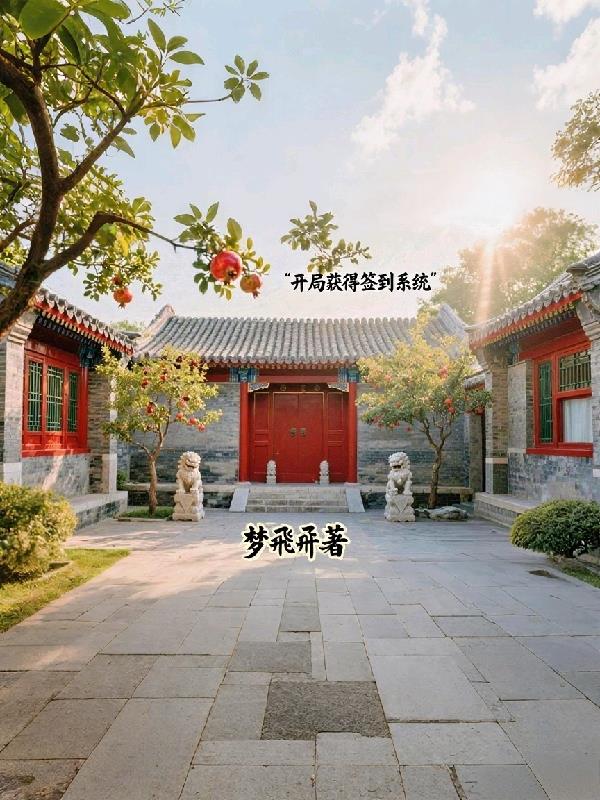
"No!" Zhao Chen shook his head, "This site is a repurposed Siheyuan old residence; beneath is ordinary clay, at most some rainwater seepage."
"But it's now drawing from a deep aquifer," Mr Mu pointed at the real‑time chart, "Look at this infiltration rate; ordinary shallow water couldn't sustain this long."
Zhao Chen stared at the chart, his complexion gradually changing. Indeed, based on the data, that amount of water should have dried up long ago. Yet it kept absorbing, and more aggressively, as if an abyss had opened below.
The system popped up another red alert: "Localized ecological imbalance; intervention recommended."
He didn't move. His hand hovered over the manual power‑cut button, but he hesitated. One, he feared a forced shutdown might cause a larger structural collapse; two, … he also wanted to see how far this thing could go.
Footsteps came from outside, likely a duty officer hearing the alarm and coming in. He shouted loudly, "Don't open the door! We're depressurizing inside, wait for my signal!"
The footsteps outside paused, then walked away.
Inside, only the machines' hum and the splash of water remained. In the video, Mr Mu's face was lit blue by the Screen, his mouth moving as if to ask something, but before he could speak the signal flickered, went dark, then returned to a gray box reading "Connection Lost."
Zhao Chen stared at the gray area, stunned for a few seconds.
On the main Screen, the water‑level curve finally ceased rising, halting at 1.47 m. The water‑covered area steadied, forming a sudden small pond that quietly enveloped the metal chamber. Through the glass window, the plant inside still stood upright, leaves unfurled, its color greener than before, as if it had just drunk a spring rain.
But no one thought that was a good thing.
He slowly sat down, his fingers unconsciously picking at a raised lacquered edge of the table. Two thoughts raced through his mind: one, the grass should be renamed "Water‑Pumping Monster"; the other—next time he'd run an experiment, he'd first check the geological map.
End of Chapter